Tuesday, January 25, 2011
Friday, January 07, 2011
My Kingdom for a Book
Lately, I read and I read and I read and I read but I can't connect with the book that carries me to the place I need to be.

Tuesday, November 02, 2010
socialmention.com shows lorebrarian top poster
http://socialmention.com/search?q=bibliotherapy&t=all&btnG=Search
Do your own search and/or follow the RSS feed to keep up on what's being posted on bibliotherapy all over the web.
Do your own search and/or follow the RSS feed to keep up on what's being posted on bibliotherapy all over the web.
Friday, October 29, 2010
Music Therapy Exercise
Using this list or your memory, if you're so lucky, create a soundtrack for your life.
Tuesday, October 26, 2010
Curtains by Tom Jokinen
Subtitle:
Adventures of an Undertaker-In-Training.
Inside scoop on post death rigamarole, including multitude of new options and trends toward green burial. Interesting read by Canadian author who spent six months behind the scenes, hands-on. At 55 1/2, I'm glad to know there are cheaper alternatives for my final purchase. For those who stand on ceremony, Robert Anton Wilson's send off celebration ushers in a cyber-mystic new age of dying. If I had some extra cash, I wouldn't mind investing in an artisan urn from Graton California. Will add links to sites offering such goodies when I have a chance to do a little surfing.
Adventures of an Undertaker-In-Training.
Inside scoop on post death rigamarole, including multitude of new options and trends toward green burial. Interesting read by Canadian author who spent six months behind the scenes, hands-on. At 55 1/2, I'm glad to know there are cheaper alternatives for my final purchase. For those who stand on ceremony, Robert Anton Wilson's send off celebration ushers in a cyber-mystic new age of dying. If I had some extra cash, I wouldn't mind investing in an artisan urn from Graton California. Will add links to sites offering such goodies when I have a chance to do a little surfing.
Saturday, October 09, 2010
Poetry Therapy II
personally edited version of The Descent of Winter by William Carlos Willams
This sadness of the sea--
waves of lifting and falling mood.
My writings are a sea
full of misspellings and
faulty sentences. Level. Troubled.
There are no perfect waves--
This sadness of the sea--
waves of lifting and falling mood.
My writings are a sea
full of misspellings and
faulty sentences. Level. Troubled.
There are no perfect waves--
Sunday, October 03, 2010
by the bed
Curtains by tom jokinen; dreaming in chinese by deborah fellows; vamped by david sosnowski; house of many gods by kiana davenport
Published with Blogger-droid v1.6.1
Monday, September 27, 2010
GABA and Creativity
Information on readers and writers in collaborative creative experience.
(To be edited for pertinent info at some future date.)
http://books.google.com/books?hl=en&lr=&id=s9wvObtBk_IC&oi=fnd&pg=PA427&dq=gaba+and+creativity&ots=AHoCPTxgx7&sig=Ko0OvlQHxFRQIsiw3tqBL9JbaH0#v=onepage&q=gaba%20and%20creativity&f=false
(To be edited for pertinent info at some future date.)
http://books.google.com/books?hl=en&lr=&id=s9wvObtBk_IC&oi=fnd&pg=PA427&dq=gaba+and+creativity&ots=AHoCPTxgx7&sig=Ko0OvlQHxFRQIsiw3tqBL9JbaH0#v=onepage&q=gaba%20and%20creativity&f=false
The Road to Oceania - William Gibson & Zero History: Reading had likely been his first drug.
http://www.netcharles.com/orwell/articles/col-rtoceania.htm
In NYTimes, June 25, 2003, Gibson presents an idea that may have seeded ZERO HISTORY.
Read: "The collection and management of information, at every level, is exponentially empowered by the global nature of the system itself..." I.e., In every moment, our lives shape the world order and in turn are shaped my it.
As our lives become open books, the transparency of our collective lives creates a new relationship to time. Past and future exist simultateneously in the present. Knowing the present, being fully present, allows us to know and thus shape the future albeit in our own small way. Characters in Zero History embody extremes of influence, from the mild-mannered protagonist to the arms trading antagonist and many, many levels in between from FBI to fashionista.
Gibson, roughly: Ideas have lives of their own; the "order flow" wants to happen; we need to move with the flow or get out of its way, as stasis presents potential problems for simultaneous awareness and realization.
All this aside, my favorite line from the book was a one-off reference to the mediocrity of professionalism.
You've just gotta love Gibson for those underlying glimmers of the man behind the magic. Gibson invites us to see not just the man behind the curtain, but the curtain.
In NYTimes, June 25, 2003, Gibson presents an idea that may have seeded ZERO HISTORY.
Read: "The collection and management of information, at every level, is exponentially empowered by the global nature of the system itself..." I.e., In every moment, our lives shape the world order and in turn are shaped my it.
As our lives become open books, the transparency of our collective lives creates a new relationship to time. Past and future exist simultateneously in the present. Knowing the present, being fully present, allows us to know and thus shape the future albeit in our own small way. Characters in Zero History embody extremes of influence, from the mild-mannered protagonist to the arms trading antagonist and many, many levels in between from FBI to fashionista.
Gibson, roughly: Ideas have lives of their own; the "order flow" wants to happen; we need to move with the flow or get out of its way, as stasis presents potential problems for simultaneous awareness and realization.
All this aside, my favorite line from the book was a one-off reference to the mediocrity of professionalism.
You've just gotta love Gibson for those underlying glimmers of the man behind the magic. Gibson invites us to see not just the man behind the curtain, but the curtain.
Saturday, September 04, 2010
Saturday, August 28, 2010
Like being in love: Reading
In skimming some of the sites earlier today, it dawned on me. (I love that saying "dawned on me.") Reading is like being in love. As in love, for a short time, we are taken out of ourselves and feel connected with something larger. Whether it's a character, the author, the setting, it's the connection to something that expands while encompassing (a magical word) our being.
Have you fallen in love lately?
Have you fallen in love lately?
random sampling of Google Alerts on query BIBLIOTHERAPY
Ooooo, must re-visit:
http://libnancy.posterous.com/
academic:
http://digitalcommons.library.unlv.edu/lib_articles/23/ (free download/other site charges $30)
A bit off topic but is timely and might be a good resource for bibliotherapy:
http://bibliophilebythesea.blogspot.com/2009/11/2010-reading-from-my-shelves-project.html
Collection of links to pdf documents, many free but others link to pay site (bahumbug) still worth it for the links that deliver:
http://books168.com/bibliotherapy-writing-therapy-pdf.html
Interesting "docstoc" articles readable without download or with:
http://www.docstoc.com/docs/51838675/within-Play-Therapy-Benefits-of-Utilizing-emotional-release-therapy
Hello...This is NOT bibliotherapy, this is biblio prophesy: http://residueprojects.com/oracle/biblio-therapy-ladies-with-oracle-cornelius-agrippa.html/
This on the other hand is a step in the right direction. I could see it on my library's web page:
http://librarybooklists.org/fiction/children/jbibliotherapy.htm
academic:
http://www.google.com/url?sa=X&q=http://www.ideals.illinois.edu/bitstream/handle/2142/6057/librarytrendsv11i2f_opt.pdf%3Bjsessionid%3DD92B89746655B1DAEBFB64012E176B0B%3Fsequence%3D1&ct=ga&cad=:s7:f2:v0:d1:i1:ld:e1:p1:t1282229640:&cd=TRStnS3hFxA&usg=AFQjCNEPmOdRIn8KnMUiISOYThtKg7VZPw
The concept of bibliotherapy is becoming more widespread and socially acceptable as fact:
http://www.docstoc.com/docs/40522591/Effetti-della-biblioterapia
Focus on biographies and gifted kids:
http://www.ingeniosus.net/archives/tag/bibliotherapy
Alfred Adler Institute:
http://pws.cablespeed.com/~htstein/fict-psy-preview.htm
Prose before prozac & book clubs as thereapy:
http://www.women24.com/BooksAndAstrology/News/Bibliotherapy-101-20100517
Confused idea of bibliotherapy but nice links to reader related sites:
http://somanybooksblog.com/2010/05/09/bibliotherapy-and-what-happens-when-you-have-so-many-books/#comment-52406
Links to academic papers that probably requries $$, but could probably be found for free with a bit of searching. (Reminder to self to see what's worth digging up and posting.):
http://www.searchmedica.com/search.html
Asperger's syndrome recommendation for a book that is a strong case of reading as therapeutic approach:
http://www.42online.org/node/276
http://libnancy.posterous.com/
academic:
http://digitalcommons.library.unlv.edu/lib_articles/23/ (free download/other site charges $30)
A bit off topic but is timely and might be a good resource for bibliotherapy:
http://bibliophilebythesea.blogspot.com/2009/11/2010-reading-from-my-shelves-project.html
Collection of links to pdf documents, many free but others link to pay site (bahumbug) still worth it for the links that deliver:
http://books168.com/bibliotherapy-writing-therapy-pdf.html
Interesting "docstoc" articles readable without download or with:
http://www.docstoc.com/docs/51838675/within-Play-Therapy-Benefits-of-Utilizing-emotional-release-therapy
Hello...This is NOT bibliotherapy, this is biblio prophesy: http://residueprojects.com/oracle/biblio-therapy-ladies-with-oracle-cornelius-agrippa.html/
This on the other hand is a step in the right direction. I could see it on my library's web page:
http://librarybooklists.org/fiction/children/jbibliotherapy.htm
academic:
http://www.google.com/url?sa=X&q=http://www.ideals.illinois.edu/bitstream/handle/2142/6057/librarytrendsv11i2f_opt.pdf%3Bjsessionid%3DD92B89746655B1DAEBFB64012E176B0B%3Fsequence%3D1&ct=ga&cad=:s7:f2:v0:d1:i1:ld:e1:p1:t1282229640:&cd=TRStnS3hFxA&usg=AFQjCNEPmOdRIn8KnMUiISOYThtKg7VZPw
The concept of bibliotherapy is becoming more widespread and socially acceptable as fact:
http://www.docstoc.com/docs/40522591/Effetti-della-biblioterapia
Focus on biographies and gifted kids:
http://www.ingeniosus.net/archives/tag/bibliotherapy
Alfred Adler Institute:
http://pws.cablespeed.com/~htstein/fict-psy-preview.htm
Prose before prozac & book clubs as thereapy:
http://www.women24.com/BooksAndAstrology/News/Bibliotherapy-101-20100517
Confused idea of bibliotherapy but nice links to reader related sites:
http://somanybooksblog.com/2010/05/09/bibliotherapy-and-what-happens-when-you-have-so-many-books/#comment-52406
Links to academic papers that probably requries $$, but could probably be found for free with a bit of searching. (Reminder to self to see what's worth digging up and posting.):
http://www.searchmedica.com/search.html
Asperger's syndrome recommendation for a book that is a strong case of reading as therapeutic approach:
http://www.42online.org/node/276
Monday, August 23, 2010
Tuesday, July 27, 2010
Fiction - the best book lists from Flashlight Worthy
Fiction - the best book lists from Flashlight Worthy: "- Looks to be a treasure chest for readers. There 's more than fiction on the site, I just chose the obvious based on my personal preference.
Peter Steinberg and Eric Mueller, who run the site, both love to read very, very much, and explain Flashlight Worthy is equal parts Peter's idea, Eric's coding, the suggestions of the Flashlight Worthy community, and the support of friends and family.
They take suggestions for their lists from the community at large, if you register and have something they agree needs adding.
If this isn't a jumping off place for bibliotherapy, I don't know what is. Well done, boys.
Peter Steinberg and Eric Mueller, who run the site, both love to read very, very much, and explain Flashlight Worthy is equal parts Peter's idea, Eric's coding, the suggestions of the Flashlight Worthy community, and the support of friends and family.
They take suggestions for their lists from the community at large, if you register and have something they agree needs adding.
If this isn't a jumping off place for bibliotherapy, I don't know what is. Well done, boys.
Sunday, July 18, 2010
Why Read?
My fascination with bibliotherapy is rooted in a need for self validation, granted. But there are reasons we value reading of the pleasure variety. My heretofore undocumented intent for this blog is to keep me focused on this idea so that there may come a time when I can put all the pieces together and have something worth sharing.
Tonight (3:51 a.m.), eureka, we read for positive self reinforcement. That, and as an added benefit, we have a better chance of embedding something in our memory if it's in the form of a story. (There's a reason all religious leaders have been excellent storytellers...)
Then again, stories have multiple level impacts, one of which involving affecting our moods aka emotions aka neurotransmitters or brain chemistry. So...in effect, we could alter our mood, or state of mind, by what we are reading, i.e., reading alters our consciousness. Trippy, right?
So, if we tag what we read, not just with subject, author, title, keyword language, but take it to the next level and tag with how the reading made us feel, we would have a huge database equivalent to a literary drugstore of psychotropic and/or homeopathic remedies. (That is, if you are like me in that sometimes you find yourself not in the frame of mind you would like to be inhabiting and would like to lift to a preferable head space.
More on this, and please make suggestions on implementation of the above. The collaborative opportunity is a big part of what would make this work.
Tonight (3:51 a.m.), eureka, we read for positive self reinforcement. That, and as an added benefit, we have a better chance of embedding something in our memory if it's in the form of a story. (There's a reason all religious leaders have been excellent storytellers...)
Then again, stories have multiple level impacts, one of which involving affecting our moods aka emotions aka neurotransmitters or brain chemistry. So...in effect, we could alter our mood, or state of mind, by what we are reading, i.e., reading alters our consciousness. Trippy, right?
So, if we tag what we read, not just with subject, author, title, keyword language, but take it to the next level and tag with how the reading made us feel, we would have a huge database equivalent to a literary drugstore of psychotropic and/or homeopathic remedies. (That is, if you are like me in that sometimes you find yourself not in the frame of mind you would like to be inhabiting and would like to lift to a preferable head space.
More on this, and please make suggestions on implementation of the above. The collaborative opportunity is a big part of what would make this work.
Thursday, July 15, 2010
Cory Doctorow's FOR THE WIN and Alex Shakar's THE SAVAGE GIRL
Every now and then, synchronicity strikes and I find myself reading two books that dovetail thematically. Such is the case with For the Win and The Savage Girl. Both novels endeavor to awaken our sensitivities to the out-of-control influences extant in our late stage capitalism.
Doctorow's book is being marketed to young adults and the style and pacing is perfect for his market. Loved the book and the message: Solidarity! but missed a more adult approach to character development. That's where Shakar's book came to the rescue: slower plot development, but we have the opportunity to develop a little insight into the main characters.
Doctorow's book has been published recently and Shakar's in 2001. Both books voice a strong concern for our devolution as a species brought on through our enslavement to consumerism. Doctorow's gamers fight for standards, such as those safeguarded by unions. Shakar talks of a "post-ironic" society where we as consumers no longer exist outside of our "purchasing power" and constantly buy to self identify.
We are each alone unto our credit rating... "But," Shakar says, "hell is not necessarily other people, no, not necessarily; hell is being surrounded by people who share no solidarity, it's like dying of thirst on the bank of a contaminated river."
Why is this we may ask ourselves and Doctorow answers, "It's the stupid questions that have some of the most surprising and interesting answers. Most people never think to ask the stupid questions." And I would add to that the many are not asking for fear of being perceived as stupid because the question IS stupid. But, the stupidity rests in the question, not in the asking which is simply part and parcel of the inconceivable path we are all on that brings us to this "post-ironic" point in time, smug in our knowledge. Because, are we not spoon fed up to the minute news stories from all over the world? Do we not have access to mindboggling POV from diverse media as well as individuals, through social networking? Are we anything if not informed? BUT, can we take the information we receive and translate it into an understanding of the forces around us that governs our lives? There lies the rub.
My bathtub book during this same time frame further supported the theme. (This has been a very, very good week or two of reading.) One of my favorite authors, Aldous Huxley, touched on some of these same subjects in his TIME MUST HAVE A STOP. However, in true form, Huxley leads us to the subject from a more philosophical frame of mind: "...there's only one corner of the universe you can be certain of improving, and that's your own self." A principle that is in direct contradiction to his character of rich uncle Eustace who surmises, "So long as one was alive, death didn't exist, except for other people. And when one was dead, nothing existed, not even death. So why bother?"
Little does rich uncle Eustace know that no sooner than the words are uttered than he has a heart attack and dies, primarily from apathy and overindulgence. But this isn't what's of interest, rather Huxley's description of the death experience on pp.125-129, or most of chapter 13.
Doctorow's book is being marketed to young adults and the style and pacing is perfect for his market. Loved the book and the message: Solidarity! but missed a more adult approach to character development. That's where Shakar's book came to the rescue: slower plot development, but we have the opportunity to develop a little insight into the main characters.
Doctorow's book has been published recently and Shakar's in 2001. Both books voice a strong concern for our devolution as a species brought on through our enslavement to consumerism. Doctorow's gamers fight for standards, such as those safeguarded by unions. Shakar talks of a "post-ironic" society where we as consumers no longer exist outside of our "purchasing power" and constantly buy to self identify.
We are each alone unto our credit rating... "But," Shakar says, "hell is not necessarily other people, no, not necessarily; hell is being surrounded by people who share no solidarity, it's like dying of thirst on the bank of a contaminated river."
Why is this we may ask ourselves and Doctorow answers, "It's the stupid questions that have some of the most surprising and interesting answers. Most people never think to ask the stupid questions." And I would add to that the many are not asking for fear of being perceived as stupid because the question IS stupid. But, the stupidity rests in the question, not in the asking which is simply part and parcel of the inconceivable path we are all on that brings us to this "post-ironic" point in time, smug in our knowledge. Because, are we not spoon fed up to the minute news stories from all over the world? Do we not have access to mindboggling POV from diverse media as well as individuals, through social networking? Are we anything if not informed? BUT, can we take the information we receive and translate it into an understanding of the forces around us that governs our lives? There lies the rub.
My bathtub book during this same time frame further supported the theme. (This has been a very, very good week or two of reading.) One of my favorite authors, Aldous Huxley, touched on some of these same subjects in his TIME MUST HAVE A STOP. However, in true form, Huxley leads us to the subject from a more philosophical frame of mind: "...there's only one corner of the universe you can be certain of improving, and that's your own self." A principle that is in direct contradiction to his character of rich uncle Eustace who surmises, "So long as one was alive, death didn't exist, except for other people. And when one was dead, nothing existed, not even death. So why bother?"
Little does rich uncle Eustace know that no sooner than the words are uttered than he has a heart attack and dies, primarily from apathy and overindulgence. But this isn't what's of interest, rather Huxley's description of the death experience on pp.125-129, or most of chapter 13.
Saturday, July 03, 2010
Monday, May 31, 2010
Serious BookArts Bibliotherapist
http://lucymayschofield.blogspot.com/2009/08/babl-tours-to-seaside.html
One pound for 10 minutes. What a deal! But wait, that's only $12 an hour.
Won't give up my day job to hit the road at these rates.
Still, inspirational...
One pound for 10 minutes. What a deal! But wait, that's only $12 an hour.
Won't give up my day job to hit the road at these rates.
Still, inspirational...
Friday, May 21, 2010
What is bibliotherapy
What is bibliotherapy What is bibliotherapy?
Many therapists, educators, health practitioners, artists and other professionals have been practicing a form of bibliotherapy for centuries. Although the origins of "bibliotherapy" may date back to the nineteenth century, a time when the term referred to the use of books in hospitals to calm patients, it is now used to describe a wide range of practices: elementary school teachers using children’s picture books in identity formation, therapists using fiction in personal healing, and palliative caregivers using films to help people explore the fear of death. The term bibliotherapy has been evolving, yet the complexity of the practice has not been fully developed. Practitioners need to hear each others’ definitions of bibliotherapy so that we have a more complete understanding of how this term is being used and can incorporate new elements and concepts.
The theory underpinning such reading and writing is that certain readings, whether poetry, essay or story, when decoded and somatised by the “patient,” can moderate the feelings, opinions and/or the mood of the person transforming words into neural representations in the reader. This is achieved, I hypothesize, (in the absence of widely based scientific research), because the reader interprets the words as information about how the world, as experienced and described by the writer, can be realised in the brain/mind of the reader. The writer’s composition of people, places, relations, politics, etc., must be similar enough to the reader’s to induce him or her to lend their brain to the work of acquisition. At the same time this composition must be different enough to produce a helpful shift in outlook. So it is that writers say they cannot read their own work, until they are changed enough to see it as not identical to their new selves. There must be detachment as well as identification, for judgement, assessment and integration to take place.
The reports of such reading outcomes are countless. Every book club and every call-in show that asks for testimony of help from books produces innumerable stories about reading and healing. Of course these answers are shaped by the framing of the question. But what if we took the “help” and “healing” out of the question? By far the greatest number of readings of novels, poems, essays, self help books and so on take place outside any framework of what we have been calling "bibliotherapy," and outside any clinical setting. Such internalisation of fiction or fact has the potential to play a large and helpful role in the life of the reader. What takes place in a therapeutic context can happen for every reader when provided with the appropriate materials, the care, the guidance, the coaching, the education as to how to read holistically.
Compiled and edited by Dr. Hoi F. Cheu
Based on texts by ABAL members: Dr. Joseph Gold (Family Therapist, Professor Emeratis), Dr. Rober Oxlade (Psychiatrist), Dr. Jeanette Romkema (Educator), and Dr. Stephen Bonnycastle (Literary Theorist)
What is "Bibliotherapy"?
A Short Conceptualization - Stephen Bonnycastle, "Bibliotherapy in action: A reader's developing responses." Textual Studies in Canada 13/14 (The Bibliotherapy Issue, 2004), p.1.
A book enters the life of an individual, a deep relation is formed, and the person changes in some significant way as a result of this engagement. Bibliotherapy deals with how and why this happens, and how this process can be put to use in ways which improve our lives as individuals and as social beings.
A Brief History - Jeanette Romkema, "Principles and Practices of Bibliotherapy: A Workshop," presented to the Association for Bibliotherapy and Applied Literature, Royal Military College, Kingston, ON, June 12th, 2004.
Many therapists, educators, health practitioners, artists and other professionals have been practicing a form of bibliotherapy for centuries. Although the origins of "bibliotherapy" may date back to the nineteenth century, a time when the term referred to the use of books in hospitals to calm patients, it is now used to describe a wide range of practices: elementary school teachers using children’s picture books in identity formation, therapists using fiction in personal healing, and palliative caregivers using films to help people explore the fear of death. The term bibliotherapy has been evolving, yet the complexity of the practice has not been fully developed. Practitioners need to hear each others’ definitions of bibliotherapy so that we have a more complete understanding of how this term is being used and can incorporate new elements and concepts.
More Details of the Concept and Its Application - Joseph Gold, from a course on Bibliotherapy to be taught at Laurentian University (written in 2009).
Biliotherapy has been used to describe the reading of literature, in the first instance, and then, as the term became more inclusive, to the activity of writing poetry, journals and letters, in the effort to help people cope with a variety of painful situations. Whether the problem addressed be physical discomfort or disability, emotional conflict or suffering like loss, divorce, or problems arising from social situations in family, work or community, patients have used reading and writing, along with “the talking cure,” to change and improve how they feel and behave. In the clinical setting, these readings have often been prescribed; often they have been introduced by patients themselves.
The theory underpinning such reading and writing is that certain readings, whether poetry, essay or story, when decoded and somatised by the “patient,” can moderate the feelings, opinions and/or the mood of the person transforming words into neural representations in the reader. This is achieved, I hypothesize, (in the absence of widely based scientific research), because the reader interprets the words as information about how the world, as experienced and described by the writer, can be realised in the brain/mind of the reader. The writer’s composition of people, places, relations, politics, etc., must be similar enough to the reader’s to induce him or her to lend their brain to the work of acquisition. At the same time this composition must be different enough to produce a helpful shift in outlook. So it is that writers say they cannot read their own work, until they are changed enough to see it as not identical to their new selves. There must be detachment as well as identification, for judgement, assessment and integration to take place.
The assumptions underlying the hypothesis are based on continual, commonplace observations that humans make from birth. We see how people react to learning all kinds of information, and we see the results such learning produces in the expressions, language and behaviour of the listener or reader. Information produces changes in the receiver him or herself, whose brain and body, unlike a radio or phone, is not unaltered by the news passing through it. Unlike a machine, the human brain and its extended organism is changed by the meaning of the lexicon decoded by that brain. Unless of course the lexicon is in a language unknown to the reading brain.
In human brains the reader’s biochemistry is altered as aspects of the recipient/reader are emotionally changed in the service of adaptation. The information may be of such a nature that action may need to be taken in the interests of safety or well being. For instance, we are aware of listening carefully to reports about weather warnings, epidemics, air raids, in order to protect ourselves and make our plans. We are much less aware that information within storied texts interweaves with our personal narratives in countless areas involving relationships, behaviour and connections in all aspects of our daily lives. How we can read to achieve this connection to the text, to enhance this rich learning experience, is teachable and learnable. The skill that makes this possible can become a habit of thought and feeling, requiring the permission and active engagement of the reader. The first requirement of such teaching is raising the reader’s awareness of this potential.
The changes that arise from new information that is helpful can alter the central and autonomic nervous system producing increased levels of endorphins, increasing hope and expectations, lessening feelings of isolation and self pity, assisting in planning, future thinking, problem solving, activating imagination and therefore creativity, increasing important knowledge of the world and improving self knowledge by means of reflection upon reading. All and any of these may have the benefit of providing relief from repetitive and compulsive cycles of negative thinking, from despair, and from a feeling of cognitive emotional entrapment. New ways of evaluating our acquired data help us review and revise our relationships to others and our environment.
The reports of such reading outcomes are countless. Every book club and every call-in show that asks for testimony of help from books produces innumerable stories about reading and healing. Of course these answers are shaped by the framing of the question. But what if we took the “help” and “healing” out of the question? By far the greatest number of readings of novels, poems, essays, self help books and so on take place outside any framework of what we have been calling "bibliotherapy," and outside any clinical setting. Such internalisation of fiction or fact has the potential to play a large and helpful role in the life of the reader. What takes place in a therapeutic context can happen for every reader when provided with the appropriate materials, the care, the guidance, the coaching, the education as to how to read holistically.
We arrive on earth equipped with a story template developed over hundreds of thousands of years of evolution. I think it is entirely possible to teach a new level of consciousness to readers regarding their own reading process. It will of course be obvious that this idea has a strong biological bias or tone, and the more we learn about our selves as organisms, the more this tone will be evident. There is a growing body of information on human development and the complexity of thinking and feeling in the formation of our personal identities, as well as knowledge of what hinders healthy development.This growing awareness can now be built into the arts and humanities. Holistic reading is the term I am using for an expanded inclusion into general education of bibliotherapy.
Beyond Reading Literature - Robert Oxlade, a note for the ABAL website, 2004
Bibliotherapy refers to the use of literature as an aid to therapy, particularly for people suffering from psychological trauma or mental illness. In general, however, the term signifies a common thread that we can all, in our different ways, contribute to or benefit from, reading and writing to enhance health, growth, healing and well-being. Bibliotherapy has rapidly evolved in scope and sophistication to become an area of interdisciplinary study and practice. It now links professionals from the world of language, literature and arts with educators, psychologists, and clinical therapists from a wide range of professional backgrounds and focus. It has extended from its original book-reading dialogue therapy to include therapeutic uses of writing. The medium also has expanded from print to include audio-visual aspects of narrative through, for example, film and video.
Some Research Directions - Hoi F. Cheu
Recent achievements in our understanding of neuroplasticity and the ecology of the mind have brought new insights into the concept of bibliotherapy. What Norman Doidge calls "The Culturally Modified Brain" has dissolved a century old nature vs. nurture discourse: "Not only does the brain shape culture, culture shapes the brain (The Brain that Changes Itself, Penguin, 2007, p. 287). We now have scientific observations to demonstrate that cultural activities can change brain structures. This knowledge has significant implications to the study of literature. After decades of cultural construction theories, we can now reunite with the scientists to investigate a biological approach to literature without going against what we know experientially - literature, or complex storytelling in any form, is natural and beneficial to "the symbolic species," as the medical anthropologist Terrance Deacon refers to human beings.
But still we know little about the actual interrelations between storytelling and brain structure. There is much room for new discovery and breakthrough in brain science and medicine. From a "humanities" perspective, the awareness may also imply a necessary enquiry into the application of literature beyond cultural, psychoanalytic, and political criticism. It is time to study more closely how to engage the brain and the process of "literature." We can no longer consider literature to be a form of high art; instead, it is time for literary scholars to look more closely into how the personal and the political, as well as the biological and the technological, aspects of "stories" rewire the brain and rewrite life. And, in turn, how the brain can restructure our cultural landscape through inventing metaphors, articulating feelings, extending connections, and turning neuro-impulses into personal and social transformations. In light of bibliotherapy, literary education is about engaging the process of "literature" as a basic survival resource. By literature, bibliotherapy refers to the storytelling process: a human activity that learns and uses symbolic language to make connections, to make sense, and consequently to create identities and self-consciousness. Literature is an adaptive human behaviour for responding to and coping with change. To conduct a full scale of investigation of literature's benefits and learn how to engage bibliotherapy more effectively, we need a new round of trans-disciplinary conversations among arts and sciences.
Sunday, April 11, 2010
editing T.S. Eliot (poetry therapy)


There will be time to digress,
In the afternoon, the evening,
Malingering moment to moment
Crisis to crisis,
Disturbing universes.
I have wept; I have fasted:
I have wasted time; by time am wasted.
Growing old, growing old:
Singing mermaid songs.
How to begin? Why presume?
Women in Michelangelo's room,
Framed and painted canvas on the wall,
Has it been worthwhile, after all.

Wednesday, March 10, 2010
Joanna Russ's On Strike Against God 1980
"I've lost my awe of the library completely: this vast, defunct megalith over which we little mammals wander, nipping and chewing bits of its skin." p.91
And yet, I wouldn't have been able to read this out-of-print book without interlibrary loan. I appreciate the metaphor by Russ, but I would have to say my awe of libraries remains unblemished.
And yet, I wouldn't have been able to read this out-of-print book without interlibrary loan. I appreciate the metaphor by Russ, but I would have to say my awe of libraries remains unblemished.
Wednesday, March 03, 2010
Narcissism and ambition
"Narcissistic adults are widely thought to be the result of bitter disappointment, of radical disillusionment in the significant others in their infancy. Healthy adults accept their self-limitations (the boundaries and limitations of their selves). They accept disappointments, setbacks, failures, criticism and disillusionment with grace and tolerance. Their self-esteem is constant and positive, not substantially affected by outside events, no matter how severe."
- Perspectives - Vol. 6, No. 1 - A Primer on Narcissism - Page 1 of 3 (view on Google Sidewiki)
Sarah Waters' The Little Stranger
With Rebecca's Mandalay ambience and Jane Eyre's psychological complexes, Waters' newest novel is good for being derivative. Not as compelling as her trilogy Tipping the Velvet, Affinity and Fingersmith but readable. The jacket describes it as "thrilling" but that stretches it more than a little. Rather than read her, I would recommend the film versions of her trilogy. Very hot.
Thursday, February 25, 2010
Reader Types in one Reader Response Theory
Six different types of reader (Associative, Investigative, Speculative, Affective, Cognitive and Passive) were apparent from my data, and it appears that an optimal match or fit occurs between specific readers and certain texts. Certain readers were compatible with some texts and not others. The types of reader or identity style indicate the satisfactions a reader may seek from the reading event. In my longitudinal study the readers operated predominantly on one of the six styles consistently. Certain combinations of text and reader exhibited a ‘best-fit’. Where such compatibility exists, the reader is enriched by the encounter and the text is no longer the same text as it was when created by the author; it becomes infused with the life and experience of the reader. Both reader and text change in the process.
The Associative Reader: This reader enjoys a text if it is relevant to their own experience. This reader sees her task being the connection of their past experience with that of the poem. In journal entries of the associative reader the text seems to function prolifically as a ‘stimulus’, the text reminding them of one experience after another. Personal memories are evoked by the text. If the text has a message to communicate which the reader feels to be relevant to the reader’s life, a positive reaction is likely. This reader who associates a text with her own experience rarely finds comprehension a problem. This reader rarely comments on style in initial encounters with the text, because meaning is seen to be of prime importance. In some
respects this reader is similar to the cognitive reader, but an important difference is that the cognitive reader often focuses on social rather than personal significance in the text.
The Investigative Reader: This reader is similar to the speculative reader but differs in certain important respects. Like all good detectives the investigative reader likes to find a solution. This reader generates a number of tentative hypotheses about the meaning of a text, but this reader is not as relaxed as the speculative reader, as he wants to find a solution and bring the text to definite closure. The investigative reader often believes in the existence of one fine, fixed and definite interpretation. Nailing down the author’s views and message is often important. The investigative reader desires coherence in a text and attempts to fit the different parts of the text into a unifying whole. If some parts of the text cannot be reconciled with others, the reading experience becomes less enjoyable and can be frustrating. The investigative reader needs a sufficient degree of indeterminacy (to use Iser’s term) to be fulfilled. A negative reaction arises from too much indeterminacy, where a text ‘can mean anything’ (like ‘The Sick Rose’ by William Blake), or too little indeterminacy, where a single correct meaning is obvious.
The Speculative Reader: The speculative reader is able to adopt a detached viewpoint and set up a range of propositions or hypotheses which can be quickly and easily disregarded in favour of more plausible interpretations. This reader is philosophical and has an outlook that is characterized by more depth than most of the others – she thinks deeply about things. She easily engages in metacognition and rather introspective reflections about her own reflections. The speculative reader enjoys ambiguity and may enjoy obscure and impenetrable works. This reader tolerates confusion, ambiguity and incomprehension. The speculative reader is ‘laid back’ and is unperturbed by texts which do not easily yield up their meanings. The text’s resistance to closure simply increases this reader’s pleasure, and simple or straightforward literary texts are disliked. This reader dislikes texts that are too didactic or simplistic. The speculative reader focuses on meaning rather than form or literary techniques. This reader enjoys profound works that provoke her to consider the nature of the human condition. The focus in journal entries is on blueprint, not stimulus. Only after a text has been interpreted to some degree does this reader make connections between their own life experience and the text.
The Affective Reader: The affective reader judges a poem predominantly on its affective impact. Both in life and in reading this reader focuses on emotions. Feelings and moods are often referred to in journal entries. Any mood is better than no mood at all for this reader. This should not be confused with a text that is about an emotional experience – rather the experience, mood or feeling needs to be generated in this reader for the text to be appreciated. The affective reader believes that a text has been created as a result of an emotional experience on the part of the poet and feels that it should be apprehended through feeling. Understanding the meaning of a text seems to be important as it is a prerequisite for a mood to be evoked. Theme and subject are more important than form, and, as with the speculative reader, texts of profound significance to the human experience are appreciated especially if they make the reader ‘feel’.
The Cognitive Reader: This reader is more detached and less emotionally involved than the affective reader. More than the associative reader this reader enjoys the cognitive challenge of active reading and appreciates texts which require some effort to understand, revelling in the process of constructing meaning rather like the speculative or investigative reader. Like them, this reader tends to focus on content and meaning. The cognitive reader enjoys thinking and takes pride in the ability to use logic, imagination and lateral thinking. The desire for intellectual stimulation results in obvious and immediate poems being disliked. The cognitive reader may be more socially aware than the associative reader, and works are appreciated if they inform issues which have social relevance. A thoughtful, analytical reaction rather than an emotional response tends to be produced. The cognitive reader enjoys the mental process of interpreting poems but appreciates it if the message of the poem has social significance.
The Passive Reader: This reader fails to engage in the active construction of meaning, has a negative attitude to literary reading, and cannot tolerate ambiguity – prefers prose and non-fiction.
Acknowledgement:
The above is from an online version of a lecture
by Mark A. Pike, Ph.D
For anyone following this blog: Ultimately my interpretation of bibliotherapy is that it's what happens when you apply reader-response criticism to any work of fiction/non-fiction, regardless of media or age group. Below are some ideas related to teaching and related applications of bibliotherapy.
Reader-response
Enhancing Response to Literature through Character Analysis. Argues that traditional textbook approaches to teaching literature alienate students from literature. Describes effective alternatives in which students learn interpretive strategies as they analyze and discuss their own important values in life, and then those of characters in a story; and learn to deal with irony. Outlines writing activities that reinforce interpretive strategies and analytical skills students have developed. Proposes that instruction targeted at conceptual change should be designed to consider cognitive development and capitalize on what is known about social development. Discusses: (1) asking students to "step into" and explore the world of the text; and (2) helping students "step out" of the world of the text to consider it analytically. Includes providing opportunities to (1) improvise, (2) examine specific speeches in depth, and (3) speed write about a character's thoughts. ctively in class for reader response. On Day 1, after students read the novel, the instructor re-read selected passages aloud and asked students to record their responses; on Day 2 students met in small groups, shared their writing, and selected two common images to use as a book cover; on Day 3 students sketched their covers on the board and discussed why they chose these particular images and what they signified. Each group discussed their cover and identified connections between their images and what they perceived as messages in the text. This exercise shows students that they can begin to analyze and interpret a literary work independent of the teacher or commentaries by a literary critic. Suggests that where children are given the power to make meaning for themselves, they are more likely to learn to read critically than those who are not. Connecting to Story through the Arts. Provides examples of arts infused literary studies, with each example using art experiences (expressive writing, creative movement, visual arts, exploratory music, and informal drama) to relate to the literature text. Notes that the learning outcome is to involve readers in exploring the meaning of the story as it relates to their own life experiences. Notes that literature responses nurture the transactions between readers and meaningful texts. Noting that children must be provided with the opportunity to read various types of text as early as possible if they are to develop into strategic and self-directed readers, this paper presents research evidence to show that every text type makes unique demands on readers. Story mapping. Learning comes from reading and sharing reading. We learn by "overhearing" our own and others' meaning-making processes.
Reader-response
Enhancing Response to Literature through Character Analysis. Argues that traditional textbook approaches to teaching literature alienate students from literature. Describes effective alternatives in which students learn interpretive strategies as they analyze and discuss their own important values in life, and then those of characters in a story; and learn to deal with irony. Outlines writing activities that reinforce interpretive strategies and analytical skills students have developed. Proposes that instruction targeted at conceptual change should be designed to consider cognitive development and capitalize on what is known about social development. Discusses: (1) asking students to "step into" and explore the world of the text; and (2) helping students "step out" of the world of the text to consider it analytically. Includes providing opportunities to (1) improvise, (2) examine specific speeches in depth, and (3) speed write about a character's thoughts. ctively in class for reader response. On Day 1, after students read the novel, the instructor re-read selected passages aloud and asked students to record their responses; on Day 2 students met in small groups, shared their writing, and selected two common images to use as a book cover; on Day 3 students sketched their covers on the board and discussed why they chose these particular images and what they signified. Each group discussed their cover and identified connections between their images and what they perceived as messages in the text. This exercise shows students that they can begin to analyze and interpret a literary work independent of the teacher or commentaries by a literary critic. Suggests that where children are given the power to make meaning for themselves, they are more likely to learn to read critically than those who are not. Connecting to Story through the Arts. Provides examples of arts infused literary studies, with each example using art experiences (expressive writing, creative movement, visual arts, exploratory music, and informal drama) to relate to the literature text. Notes that the learning outcome is to involve readers in exploring the meaning of the story as it relates to their own life experiences. Notes that literature responses nurture the transactions between readers and meaningful texts. Noting that children must be provided with the opportunity to read various types of text as early as possible if they are to develop into strategic and self-directed readers, this paper presents research evidence to show that every text type makes unique demands on readers. Story mapping. Learning comes from reading and sharing reading. We learn by "overhearing" our own and others' meaning-making processes.
Wednesday, February 24, 2010
Write Or Die : Dr Wicked's Writing Lab
Using a timer the following took about 15 minutes to Write Or Die : Dr Wicked's Writing Lab
Octavia Butler's Fledgling is not bad. Always looking for new vampire renditions. I like that the vampire is a little girl, who is older than she appears and sexually active. I think this speaks to something we all know intuitively to be true. Little girls have an innate awareness of themselves as sexual beings long before boys and become aware of their power at an early age. Butler makes the simple but often ignored truths core elements of her narrative. Simple facts, no moral or ethical judgment, just the way things are in this alternate world of creatures who feed and form symbiotic relations with their food.
Lots of excitement. Thriller plot line. Could be more earthy. Something sensual in the feeding experience is suggested, but misses the mark. Analogy to wine might bring in a lexicon for why one blood tastes better than another. If it's just a question of chemistry and palate, why? Genetics are mentioned but not in way that brings anything new to the reader, more as a teaser. Our protagonist is an genetic experiment. Use a bit of the lingo, make me believe it's possible. So much of the premise is just background.
Still, readable for undemanding fans of the genre.
Octavia Butler's Fledgling is not bad. Always looking for new vampire renditions. I like that the vampire is a little girl, who is older than she appears and sexually active. I think this speaks to something we all know intuitively to be true. Little girls have an innate awareness of themselves as sexual beings long before boys and become aware of their power at an early age. Butler makes the simple but often ignored truths core elements of her narrative. Simple facts, no moral or ethical judgment, just the way things are in this alternate world of creatures who feed and form symbiotic relations with their food.
Lots of excitement. Thriller plot line. Could be more earthy. Something sensual in the feeding experience is suggested, but misses the mark. Analogy to wine might bring in a lexicon for why one blood tastes better than another. If it's just a question of chemistry and palate, why? Genetics are mentioned but not in way that brings anything new to the reader, more as a teaser. Our protagonist is an genetic experiment. Use a bit of the lingo, make me believe it's possible. So much of the premise is just background.
Still, readable for undemanding fans of the genre.
Tuesday, February 23, 2010
Andromeda Klein by Frank Portman


This is a YA novel by theme, but also a fun read for any adult who has ever walked on the weird side. Portman includes lots of legitimate information and resources on magical traditions both pre and post Crowley. Tarot archetypes give shape to the narrative and even define characters. I'm looking forward to seeing Portman tackle something targeting adults using the same ideas. How about a series watching Adromeda Klein grow up, sail through college and become a librarian. Maybe she could even correspond magically with the great akashic librarian in the aether. Just saying...Adromeda could be our answer to the death of Potter.
Gilda Stories by Jewelle Gomez
Interesting approach to the vampire tradition, combing feminist themes with settings ranging from the Deep South to the Wild West and all the excitement of untold historical possibilities, were it "her"story, rather than "his."
R. Scott Bakker 's Neuropath
"...precious little distinguished the neurochemical profile of love from that of obsessive-compulsive disorder."
"Everything you live, everything you see and touch and hear and taste, everything you think, belongs to this little slice of mush, this little wedge in your brain called the thalamocortical system. The neural processing that makes these experiences possible__we're talking about the most complicated machinery in the known universe __is uttterly invisible. This expansive, far-reaching experience of yours is nothing more than a mote, an inexplicable glow, hurtling through some impossible black. You're steering through a dream..."
"Consciousness is an end-user... Out of all the information our brains crunch every second, only a tiny sliver makes it conscious experience--less than a millionth, by some estimates."
Aren't you just loving the novel of consciousness trend and the proximity it underlines between real and surreal?
"Everything you live, everything you see and touch and hear and taste, everything you think, belongs to this little slice of mush, this little wedge in your brain called the thalamocortical system. The neural processing that makes these experiences possible__we're talking about the most complicated machinery in the known universe __is uttterly invisible. This expansive, far-reaching experience of yours is nothing more than a mote, an inexplicable glow, hurtling through some impossible black. You're steering through a dream..."
"Consciousness is an end-user... Out of all the information our brains crunch every second, only a tiny sliver makes it conscious experience--less than a millionth, by some estimates."
Aren't you just loving the novel of consciousness trend and the proximity it underlines between real and surreal?
Monday, February 22, 2010
OCD Readers Unite
I'm taking an online course in readers advisory that is work related for librarians. (Nothing like being the kid working in the candy store.) And, I introduced myself and this blog. The instructor commented that she like the concept of OCD readers and I had to reply:
"Believe me, it's more than a conceptual choice. I am quite literally unable to function without reading. The interesting thing I'm finding these days, is it's less book dependent that I once thought. Reading and writing online is satisfying some of the escapist compulsion for distraction. Without getting too metaphysical, I am beginning to think that most of what we do in our lives is invested in distracting ourselves from what is actually required to survive in the world and our nature as humans.
Hmmm, this could turn into a rant. Better save it for my readersanonymous blogging."
Which is what you are reading, if anyone out there is. Either way. The idea will be there later for further development. I welcome any thoughts on the mystical idea of distractions as a necessity for living. And, to get you going you might pick up some Marshall McLuhan. In Understanding Media, chapter 2 titled something about gadgets is what really kicked this home for me.
Tuesday, February 16, 2010
Lyda Morehouse mirrors early W.Gibson
Strong cross-gender personalities, whether self-identified as male or female. Interesting bits of info on Muslim back story. Vatican envoy sent to determine if AIs have souls. Yakuza interest and involvement. Angels, Devils, Demons and other everyday miracles.
p.133 Does God have a plan for us all? and how boring would that be?
Fractals & Free will, Order & Chaos
Or is the whole thing just a creative experiment in phenomenology.
A little heavy on the religion references, but informative, nevertheless and Lyda has a strong writing style that drags you along on what is proving to be more than a little archetypal questy.
Fallen Host is the one I just finished. Will go back and read Archangel Protocol to get the back story. I see on amazon she has two more. Lovely.
p.133 Does God have a plan for us all? and how boring would that be?
Fractals & Free will, Order & Chaos
Or is the whole thing just a creative experiment in phenomenology.
A little heavy on the religion references, but informative, nevertheless and Lyda has a strong writing style that drags you along on what is proving to be more than a little archetypal questy.
Fallen Host is the one I just finished. Will go back and read Archangel Protocol to get the back story. I see on amazon she has two more. Lovely.
Sunday, January 24, 2010
Head Case & Radiant Cool
Radiant Cool by Dan Lloyd is rich and tasty philosophical fiction with the subtitle A Novel Theory of Consciousness. I'm still reading it and am reading it slowly, not only to savor it, but also because there is much to ponder on the way. A few treats so far:
1. ...time leaves its mark on my now.
2. ...harmonics of meaning attach to every object in the knowable universe.
3. The instant has to be long enough for consciousness.
4. Meaning takes time.
5. 100 trillion modifiable synaptic connections in the brain
6. How we love the hidden order...moronic chaos of reality transfigured.
7.The Aleph
8. Multiple drafts model of consciousness (See Daniel Dennett's Consciousness Explained.)
9. The mind is a text.
10. The text is stored in memory, accessed and updated all the time, even in our dreams.
Dennis Cass's Head Case is a much lighter approach to mind and consciousness, as his subtitle suggests: How I Almost Lost My Mind Trying to Understand My Brain.
1. ...time leaves its mark on my now.
2. ...harmonics of meaning attach to every object in the knowable universe.
3. The instant has to be long enough for consciousness.
4. Meaning takes time.
5. 100 trillion modifiable synaptic connections in the brain
6. How we love the hidden order...moronic chaos of reality transfigured.
7.The Aleph
8. Multiple drafts model of consciousness (See Daniel Dennett's Consciousness Explained.)
9. The mind is a text.
10. The text is stored in memory, accessed and updated all the time, even in our dreams.
Dennis Cass's Head Case is a much lighter approach to mind and consciousness, as his subtitle suggests: How I Almost Lost My Mind Trying to Understand My Brain.
Thursday, January 14, 2010
Allreaders.com
http://www.allreaders.com/BookSearch.asp?listpage=1&search=&searchType=2&BSID=158093487
Looking for something to read based on reading habits?
I searched scifi/fantasy for books with computers/VR and on terrain (as opposed to space.) I'm going to try some of the recommended titles and see if I agree with their rankings. More later...
Looking for something to read based on reading habits?
I searched scifi/fantasy for books with computers/VR and on terrain (as opposed to space.) I'm going to try some of the recommended titles and see if I agree with their rankings. More later...
Monday, December 21, 2009
Bees: Margaret Atwood's The Year of the Flood and Douglas Coupland's Generation A
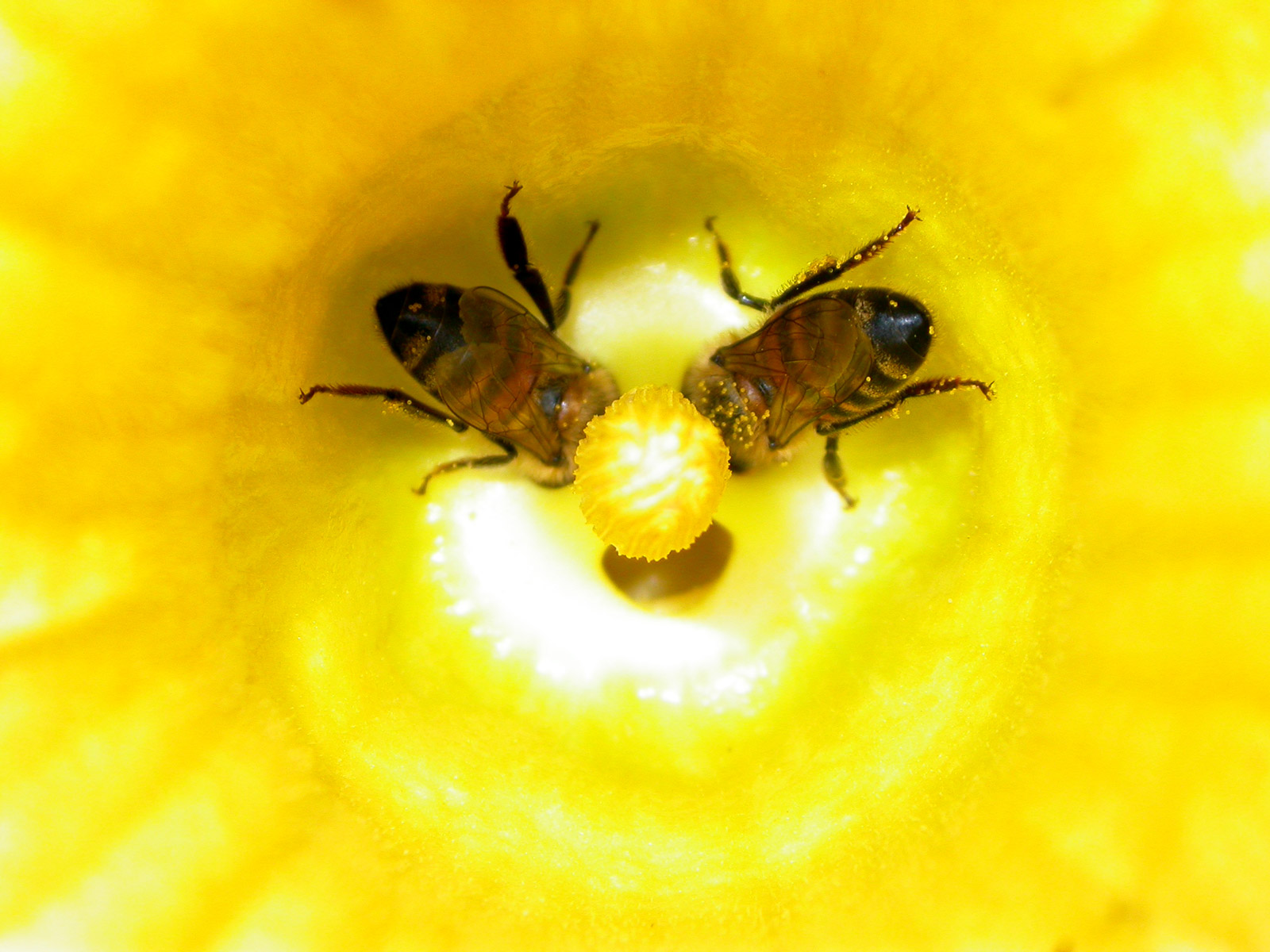
"Time is not a thing that passes...it's a sea on which you float."
Atwood's prose, timeless; her zeitgeist, cryptic. Yet, interesting that two Canadian authors would publish works with bees in 2009.
"People who think that dying is the worst thing don't know a thing about life" (Secret Life of Bees, Sue Monk Kidd) may be a connecting thread, but I can't really say, as I haven't read it. I did see the movie, though it didn't make that much of an impression, and I pulled up the "look inside" version from Amazon for the first few pages. I think Kidd's "bees" in 2002 may have sparked something in these two Canadians culminating 7 years later in their own metaphoric explorations of bees as magic messengers between worlds.
I'm just finishing Coupland's Generation A and am stung by the viral nature of stories. As physics proves that softly batting butterfly wings change the course of history, in a simpler world, we recognize that stories are the bread and butter of metaphysical sandwiches around the world.
The experience of bees swarming is as disturbing a force of nature as a violent storm. The buzz starts softly below the level of awareness, growing in volume as their disturbing and unexpected quickly moving black cloud is spotted. Still not
 registering on consciousness, as the phenomenon is most uncommon, we are given a few moments to consider sheltering options while yet unaware of the origin of the threat. And thousands of bees, moving as a single unit, are most certainly a danger to be avoided even if the likelihood of drawing their attention away from the swarm unlikely.
Atwood's bees are somewhat less central to the story than Coupland's and yet the mythology and relationship to human psyche form a pivotal point for both novels.
Atwood's bees represent collective consciousness, while Coupland's bees are seminal in their sting which Coupland correlates metaphorically to communication between/across mammalian neuropeptides.
Read them back to back, or simultaneously, for a rich Canadian rush.

Sunday, November 15, 2009
Powers, Rucker, Gaarder, Sawyer, Griffith, Doctorow
Life versus simulated life rights? (ROLLBACK, Sawyer)
"How programmed are we?" (GENEROSITY, Powers)
Can a/the Maker be created or destroyed considering Higgs boson, the latest in a long list of names for God?
Opt out of procreation to eliminate aggression or individual psychological variation versus hive mind in moral instruction (ROLLBACK, Sawyer)
"Causal stories for a causal universe" (MAKERS, Doctorow)
John G. Cramer: Transactional Interpretation, or TI (FLASHFORWARD, Sawyer)
Planck length applied to time (ROLLBACK, Sawyer)
Aleph-null: First level of infinity (HYLOZOIC, Rucker)
Runaway branching feedback, i.e., everything caused by everything else (GENEROSITY, Powers)
"Causality run amok." (MAKERS, Doctorow)
Block universe = NOW = Illusion(FLASHFORWARD, Sawyer)
Mirror neurons: Hunches, intuition, adviser, interpreter (ALWAYS, Griffith)
Without conscious beings anywhere, does reality break down, all possibilities exist in a shimmering whiteness as in the Copenhagen interpretation?(FLASHFORWARD, Sawyer)
Physical nature of the universe: external material for its own self-awareness (ORANGE GIRL, Gaarder)
Quantum physics = "By-product of the level of resolution of our simulated world" (ROLLBACK, Sawyer)
Mirror neurons re-create experience of others inside ourselves...our own cortex/body. (ALWAYS, Griffith)
"Will and words make a difference." (GENEROSITY, Powers)
Evolution favors the pessimistic aggressor. (ibid)
Tulpa, lazy eight & think infinite thoughts (HYLOZOIC, Rucker)
New Work: Authors of our own destiny (MAKERS, Doctorow)
Information at speed of light while meaning at speed of dark (GENEROSITY, Powers)
Chaos Theory (small changes have big effects over time) versus Block Universe (timelessly existing four dimensional world)(FLASHFORWARD, Sawyer)
"The secret of all imagination is theft." "The secret of survival is forgetting."(GENEROSITY, Powers)
"Threatening images get our attention faster, and we have to work harder to look away." (ibid)
Sweeping and tagging with the unconscious to envision prioritizing the gestalt for later analysis by the conscious mind. "Panic is a system conflict" between conscious and unconscious mind, much like a robot trying to compute a human saying 'I always lie'. Aligning the conscious and unconscious mind engenders power and awareness of intention of the other reveals opportune moment for action. Apologies, explanations and/or threats equals TMI. Information is currency, power, a tool. Love = loss of autonomy. We tend to believe what is convenient and ignore the rest. (ALWAYS, Griffith)
1.base 2.torque 3.movement on the out breath; rest on the in breath 4. Speed>weight 5. Don't stop at the surface. 6. Range 7. Repeatable & sustainable action preferred
"How programmed are we?" (GENEROSITY, Powers)
Can a/the Maker be created or destroyed considering Higgs boson, the latest in a long list of names for God?
Opt out of procreation to eliminate aggression or individual psychological variation versus hive mind in moral instruction (ROLLBACK, Sawyer)
"Causal stories for a causal universe" (MAKERS, Doctorow)
John G. Cramer: Transactional Interpretation, or TI (FLASHFORWARD, Sawyer)
Planck length applied to time (ROLLBACK, Sawyer)
Aleph-null: First level of infinity (HYLOZOIC, Rucker)
Runaway branching feedback, i.e., everything caused by everything else (GENEROSITY, Powers)
"Causality run amok." (MAKERS, Doctorow)
Block universe = NOW = Illusion(FLASHFORWARD, Sawyer)
Mirror neurons: Hunches, intuition, adviser, interpreter (ALWAYS, Griffith)
Without conscious beings anywhere, does reality break down, all possibilities exist in a shimmering whiteness as in the Copenhagen interpretation?(FLASHFORWARD, Sawyer)
Physical nature of the universe: external material for its own self-awareness (ORANGE GIRL, Gaarder)
Quantum physics = "By-product of the level of resolution of our simulated world" (ROLLBACK, Sawyer)
Mirror neurons re-create experience of others inside ourselves...our own cortex/body. (ALWAYS, Griffith)
"Will and words make a difference." (GENEROSITY, Powers)
Evolution favors the pessimistic aggressor. (ibid)
Tulpa, lazy eight & think infinite thoughts (HYLOZOIC, Rucker)
New Work: Authors of our own destiny (MAKERS, Doctorow)
Information at speed of light while meaning at speed of dark (GENEROSITY, Powers)
Chaos Theory (small changes have big effects over time) versus Block Universe (timelessly existing four dimensional world)(FLASHFORWARD, Sawyer)
"The secret of all imagination is theft." "The secret of survival is forgetting."(GENEROSITY, Powers)
"Threatening images get our attention faster, and we have to work harder to look away." (ibid)
Sweeping and tagging with the unconscious to envision prioritizing the gestalt for later analysis by the conscious mind. "Panic is a system conflict" between conscious and unconscious mind, much like a robot trying to compute a human saying 'I always lie'. Aligning the conscious and unconscious mind engenders power and awareness of intention of the other reveals opportune moment for action. Apologies, explanations and/or threats equals TMI. Information is currency, power, a tool. Love = loss of autonomy. We tend to believe what is convenient and ignore the rest. (ALWAYS, Griffith)
1.base 2.torque 3.movement on the out breath; rest on the in breath 4. Speed>weight 5. Don't stop at the surface. 6. Range 7. Repeatable & sustainable action preferred
Philosophical Phiction, Phriction and Reading for Phun
If there were a genre of fiction that I enjoy above all other reading matter, it would be philosophical fiction. Not a genre? What falls into the category? Who are its recognized authors? Where did it originate? Are we the when of philosophical fiction? It's a category applicable to fiction only via the reader's ability to process what s/he reads on a level other than superficial entertainment? Why is this important, not only to me, but to our conscious evolution as a species?
Some of the authors I've been reading lately might have some answers to these questions. I certainly see the underlying thread in all their works. And that's the beauty of fiction, or any art form really, it can really only ever be a reflection of the observer. Whether the observer is the creator, co-creator through the act of perceiving, or simply subject of the art object.
Some of the authors I've been reading lately might have some answers to these questions. I certainly see the underlying thread in all their works. And that's the beauty of fiction, or any art form really, it can really only ever be a reflection of the observer. Whether the observer is the creator, co-creator through the act of perceiving, or simply subject of the art object.
Tuesday, August 25, 2009
Flash Forward's author SAWYER
The 09 fall tv line up includes Robert J. Sawyer's Flash Forward.
Who knew? Probably most people won't ever.
Sawyer's examination of consciousness, relativity and an infinitely self-aware universe poses a simple analogy, "...time is like a bunch of motion-picture frames stacked up, and 'now' is the currently illuminated frame."
A few things to look up in Wikipedia to enhance your viewing and/or reading pleasure:
Many-worlds interpretation MWI or block-universe concept (no point in time is any more important than any other), transactional interpretation TI.
Tipler The Physics of Immortality
The butterfly flaps in China and a hurricane forms off the coast of Africa:
"In chaos theory small changes have big effects over time."
Higgs boson
And the proverbial tree falling in the forest:
"Without any conscious beings anywhere, reality breaks down."
"The strong anthropic principle said the universe needed to give rise to life and the Copenhagen interpretation of quantum physics said it requires qualified observers, given what was now known about the interaction of neutrinos and consciousness, the solar-neutrino problem seemed to be evidence that the universe was indeed taking pains to foster the existence of such observers.
Who knew? Probably most people won't ever.
Sawyer's examination of consciousness, relativity and an infinitely self-aware universe poses a simple analogy, "...time is like a bunch of motion-picture frames stacked up, and 'now' is the currently illuminated frame."
A few things to look up in Wikipedia to enhance your viewing and/or reading pleasure:
Many-worlds interpretation MWI or block-universe concept (no point in time is any more important than any other), transactional interpretation TI.
Tipler The Physics of Immortality
The butterfly flaps in China and a hurricane forms off the coast of Africa:
"In chaos theory small changes have big effects over time."
Higgs boson
And the proverbial tree falling in the forest:
"Without any conscious beings anywhere, reality breaks down."
"The strong anthropic principle said the universe needed to give rise to life and the Copenhagen interpretation of quantum physics said it requires qualified observers, given what was now known about the interaction of neutrinos and consciousness, the solar-neutrino problem seemed to be evidence that the universe was indeed taking pains to foster the existence of such observers.
Saturday, July 25, 2009
Sawyer's WWW:Wake
From the first mention of Julian Jaynes Bicameral Mind, it was a kind of "he had me at 'hello'" kind of reading.
The young protagonist asks in the paragraph immediately preceeding the mention, "And who decides what to leave in and what to leave out?" An interesting query to be followed by an helicoid reference to a study of human consciousness.
Caitlin reads Homer noting he, like she, is blind. Iliad and Odyssey not withstanding, Sawyer's brief reference to the importance of self-reflective thought as mirrored in western literature's two early representatives, speaks to the layering of ideas that makes Wake worth more than a cursory read.
Autism, Helen Keller, AI, and "I know I exist...because you exist" becomes Sawyer's invitation to participate in the ongoing philosophical question of Being aka ontology.
As Caitlin learns to apply her experiential awareness to its corresponding words, Sawyer works very hard to repeat his theme in different ways to present thoughts and ideas difficult to communicate because the thoughts and ideas themselves and words used to discuss them are the subject of discussion. To think in terms of colors as "flavors of light" requires a combination of sensory understanding and logical reasoning and gives us "insight" into the mechanisms involved in processing reality.
Hameroff, Penrose, cytoskeletons, microtubules, tubulin dimer, cellular automata: this is the reason I read sci fi. Shannon entropy, Zipf plots, Doug Lenat, synsets on WordNet and information theory: this is why I love cyberpunk.
The young protagonist asks in the paragraph immediately preceeding the mention, "And who decides what to leave in and what to leave out?" An interesting query to be followed by an helicoid reference to a study of human consciousness.
Caitlin reads Homer noting he, like she, is blind. Iliad and Odyssey not withstanding, Sawyer's brief reference to the importance of self-reflective thought as mirrored in western literature's two early representatives, speaks to the layering of ideas that makes Wake worth more than a cursory read.
Autism, Helen Keller, AI, and "I know I exist...because you exist" becomes Sawyer's invitation to participate in the ongoing philosophical question of Being aka ontology.
As Caitlin learns to apply her experiential awareness to its corresponding words, Sawyer works very hard to repeat his theme in different ways to present thoughts and ideas difficult to communicate because the thoughts and ideas themselves and words used to discuss them are the subject of discussion. To think in terms of colors as "flavors of light" requires a combination of sensory understanding and logical reasoning and gives us "insight" into the mechanisms involved in processing reality.
Hameroff, Penrose, cytoskeletons, microtubules, tubulin dimer, cellular automata: this is the reason I read sci fi. Shannon entropy, Zipf plots, Doug Lenat, synsets on WordNet and information theory: this is why I love cyberpunk.
Sunday, May 03, 2009
Thinking & Perceiving
Still Alice by Lisa Genova. A 50 year old cognitive psychology professor faces early onset Alzheimers. The author has a PhD in neuroscience from Harvard and tells a good story.
Douglas Coupland's The Gum Thief, which you read, right? Happy to see Coupland back up to his own standards. His remark, "I think it's better not to know the lyrics to your life" made me think that reading has been the soundtrack of my life. His recommendation for Running Wild by J.G. Ballard may well follow this blog.
Jostein Gaarder, author of Sophie's World, one of my favorites, The Ringmaster's Daughter is good but not as good as some of his others, as it feels a bit contrived: "It's a post-modern misconception that you can write first and live later...Writing is the fruit of life. Life isn't the fruit of writing." Still, good advice. "I've always had the need to unload my thoughts...a kind of mental incontinence..."
The Sacred Book of the Werewolf was nice surprise from Russian novelist Victor Pelevin. The Times Literary Supplement compares him to Murakami, but I found Pelevin more readable.
Quotes from Pelevin: "I couldn't really say what I care less about, the appearance of the things around me or the opinions of the people I meet." "Reading is human contact, and the range of our human contacts is what makes us what we are." "Transformation can appear by two routes...perception of transformation or transformation of perception." "Sex is more than just the simple conjunction of certain parts of the body. It is also a connection between the energies of two beings, a joint trip." "Love was absolutely devoid of meaning, but it gave meaning to everything else."
Douglas Coupland's The Gum Thief, which you read, right? Happy to see Coupland back up to his own standards. His remark, "I think it's better not to know the lyrics to your life" made me think that reading has been the soundtrack of my life. His recommendation for Running Wild by J.G. Ballard may well follow this blog.
Jostein Gaarder, author of Sophie's World, one of my favorites, The Ringmaster's Daughter is good but not as good as some of his others, as it feels a bit contrived: "It's a post-modern misconception that you can write first and live later...Writing is the fruit of life. Life isn't the fruit of writing." Still, good advice. "I've always had the need to unload my thoughts...a kind of mental incontinence..."
The Sacred Book of the Werewolf was nice surprise from Russian novelist Victor Pelevin. The Times Literary Supplement compares him to Murakami, but I found Pelevin more readable.
Quotes from Pelevin: "I couldn't really say what I care less about, the appearance of the things around me or the opinions of the people I meet." "Reading is human contact, and the range of our human contacts is what makes us what we are." "Transformation can appear by two routes...perception of transformation or transformation of perception." "Sex is more than just the simple conjunction of certain parts of the body. It is also a connection between the energies of two beings, a joint trip." "Love was absolutely devoid of meaning, but it gave meaning to everything else."
Wednesday, March 04, 2009
Bruce Sterling...yawn...
http://io9.com/5157008/why-does-bruce-sterling-hate-web-20
Have been trying to read B.Sterling's latest The Caryatids this weekend but kept falling asleep. Read two pages, nap two hours, read two pages, nap two hours...etc. I'm about half way through the book and still waiting for the excitement Sterling usually engenders. The link to his speech at a recent conference somewhat explains it: Sterling is out of the loop, no longer pushing the envelope, past his due date. He's talking, and writing, like one of the been there done that generation; there's no flash in his pan. Can someone point me to the new generation of forward thinking cyberpunk authors? Or maybe post-cyberpunk?
Have been trying to read B.Sterling's latest The Caryatids this weekend but kept falling asleep. Read two pages, nap two hours, read two pages, nap two hours...etc. I'm about half way through the book and still waiting for the excitement Sterling usually engenders. The link to his speech at a recent conference somewhat explains it: Sterling is out of the loop, no longer pushing the envelope, past his due date. He's talking, and writing, like one of the been there done that generation; there's no flash in his pan. Can someone point me to the new generation of forward thinking cyberpunk authors? Or maybe post-cyberpunk?
Friday, January 02, 2009
Consciousness, Reading & Forgotten Plots
My reading has been somewhat disappointing this year. I don't know if I'm becoming more critical in my old age, or if my selections have been poor. I have even taken to re-reading some of my favorite titles, something I at one time could have sworn I would never do: There being "so many books and so little time." Then there is the book that I remember reviewing once for the library newsletter and was very moved by the story but, upon stumbling upon the book again, I can't seem to motivate myself to re-read it. The latter being a novel by Sandra Shea, Philadelphia journalist, The Realm of Secondhand Souls. Checking on Amazon, unfortunately, I found nothing else attributed to her. Too bad. Sometimes a body of work is necessary to get at the soul of the novelist.
This could be said of Caitlin R. Kiernan. I have enjoyed her novels over many years and feel as if I am a part of her maturing process. Her writing hasn't necessarily matured, it was and remains good, but her sense of "being in the world" or gestalt would seem to be struggling with more of the complexity of our humanity. Her works are less dependent on the clear demarcations between good and evil. The graying out of morality colors her newer stories. I enjoyed a feeding frenzy a few months ago and zipped through Low Red Moon and Daughter of Hounds. Her work has yet to offer the insightful kernels of philosophical self awareness that I crave in a novel, though there was a breath of it at the beginning of chapter eight, Intersections, in Daughter.
And from the starry place, all things are possible, and, perhaps, all things are also probable.
Possibility is infinite here, and possibility collides, in spiraling space-time fusillades, with probability
at every turn. The unlikely and the never-was become, for fleeting instants, the actual and the
inevitable and the black facts of a trillion competing histories, each entirely ignorant of all the
others, each confident that it's the only 'true' history.
Though I have enjoyed all Kiernan's novels. She's unlikely to be someone I would re-read, not to say she won't yet write something to relish more than once.
Not so with Neal Stephenson's Diamond Age, I read it again and there may be a third read in its future. Stephenson's steamerpunk classic continues to compel evolutionary thought. His ideas, like the worlds he creates, are multi-dimensional and convoluted, woven with vibrant threads of one who sees between the cracks, reads between the lines, hears the pulsing of nature's heart. Stephenson, as Hackworth, describes Fiona, the daughter's curiousity: "The universe was a disorderly mess, the only interesting bits being the organized anomalies." Fiona, for whom the "young lady's illustrated primer" has been created by a father with the imagination and means to give his daughter ready access to wisdom beyond her years. The primer ends up in the hands of one who has the greater need for understanding in order to survive alone and after a interacting with the primer is asked by a friendly constable, "Which path do you intend to take, Nell?...Conformity or rebellion?" To which she astutely responds, "Neither one. Both ways are simple-minded--they are only for people who cannot cope with contradiction and ambiguity."
And it is this very ability in Stephenson, which deepens the consciouness while reading so that "the story (is) anfractuous develop(ing) more ramifications the more closely" (we) read it. "
His latest novel, Anathem, is excellent, though not one of my favorites of his (favorites being Diamond Age and Cryptonomicon with Snow Crash in the running.) In Anathem he writes, "Consciousness applifies the weak signals that, like cobwebs spun between trees, web Narratives together. Moreover, it amplifies them selectively and in that way creates feedback loops that steer the Narratives." In this description, I see the key to his technique and genius, the patient weaving of word over word, under and over, repeating and repeating patterns and ideas in kaleidescopic ways to invest breath in his characters by virtue of their need to find meaning in their being, whether reality or fiction is called home.
Rudy Rucker, another cyberpunk master, has a similar ability to create worlds of fantasy filtered through his own refined consciousness of abstraction and mathematical theory. Unlike,Stephenson, however, Rucker doesn't seem to take himself or his insights seriously. Absurdity being his stock in trade, Rucker challenges the reader to drop all pretense of understanding in order to fall, like Alice, into a rabbit/worm hole of surreality. In his latest, Postsingularity, Rucker toys with a new medium, not unfamiliar to those who read the genre. Rather than describe it, instead I find his depiction of the authors of this new genre more suggestive, "(Metanovelists) were more like cartoonists or directors, assembling blocks of mental states, creating networks of glyphs. Their works were embedded as teep-tags within handicraft items: tie-dyed scarves, bead necklaces, carving bits of wood."
This short passage is a perfect example of the whacked out ideas making up Rucker's novels. I'm often left feeling like I'm either stupid, uninformed or out of the loop. His terminology, such as "teep-tags" may have some meaning discernible to academic mathmeticians or computer geeks, but to me seems like a nonsensical term in the tradition of the Jabberwocky. My mind gives meaning, correct or not, in order to make sense of the story, because the story is worth making sense of.
Story, narrative, consciousness--all only slightly more complex terminology for the same sense of mapping meaning. Such is the theme in Justina Robson's Mappa Mundi, in which she writes:
" Consciousness is the emergent product of a complex and discrete set of actions
in the brain. It is the narrative story that comes a fraction of a second after the
subconscious mind has already made its decisions and taken its actions. It is a
macro-level event. But the quantum manipulation...Fermions are the stuff of matte
and bosons the stuff of fields, together forming the fabric of the universe."
Like and yet unline Rucker's higher mathematics, as I'm totally science illiterate, fermions and bosons could be anything, but at least have a ring of familiarity. Robson's character's yoga teacher is closer to my preponderance for metaphysics: "The universe came and sat inside you, the ocean poured into the drop, the drop didn't dissolve in the ocean."
And, it is exactly this kind of insight that draws me into cyberpunk, which isn't science fiction though that's where it's shelved in bookstores and libraries. Cyberpunk fiction is a search for meaning in new medias, metaphorizing McLuhan's philosophy into art forms. Such as in Robson's: "...underneath the shell of your self, all your defining moments, there is another entity that isn't bound by your human lifetime, it's an eternal, immortal thing, and the maintain that by bringing the mind to stillness, while conscious, you can make contact with it. ...it's the resonance."
It's the "ghost in the machine" that seduces us in the genre, they mystery of consciousness that shapes the story. "...all understanding is a story and no more. ...a construct of reasons and connections and ideas tethered together by narrative links..."
These links, novels, give me more in the way of understanding than math or science teachers who insisted that they couldn't answer my questions because I had to learn the basics first. Looking back, I wonder how they would feel if they had been told that they wouldn't be able to read and appreciate a work of fiction unless they could first grasp the underpinnings of transformational grammar, phenomenology or synchronicity. Which leads me to the accidentally omitted of Caitlin R. Kiernan's Murder of Angels whose ideas fit here like the single letter inserted in a game of scrabble that giving triple points: "We call it syncretization, taking elements of older stories and putting them together in new ways, or combining them with other stories to make new and more useful myths."
But back to Robson who began her Mappa Mundi with Charles Darwin, "Free will is an illusion caused by our inability to analyze our own motives." The only way we can question ourselves is through fiction, when we question and find proof in the real world it's non-fiction. Memetic theory plays a large role in Robson's novel and inspired me to pursue the topic in Wikipedia:
From what I can tell a first time author, Adam Felber, wins the NYMLibrary (not your mother's) prize for Schrodinger's Ball and his definition of humans as "spatiotemporal origami" and that yes we may be the "end product of history" but that we must "bear in mind that history is more or less a digestive tract." Puts me in mind of one of Marilyn Monroe's mentors whose advice when addressing her artistic aspirations was reputed to have been "Make good shit."
Schrodinger's Ball consists of string theory (or even suggests M-theory M might stand for maybe) with "the power of the observer" versus the "understanding of the observer" and reality being permeable from both sides but most importantly in pointing out that "what survives and propogates is the story itself, not what the story's about." And, that "to talk about a 'thought pattern' is redundant. Thoughts themselves are patterns--huge, multilayered patterns built on custom-tweaked operating systems, no two alike. The idea of a single, expressible 'thought' is a lie. But believing that lie is the only thing that makes communication possible."
Whoa, I've got to think about that in context of my upcoming book on bridging the communication gap between techies and non-techies.
So, I'll end on a now for something completely different note with Alain de Botton's Kiss & Tell. (See earlier reviews.) de Botton's prose is so seductive that if I weren't a confirmed spinster, I'd be tempted. He speaks the language of women without patronizing the gender. I learned much of myself reading his On Love (reviewed April 06) and again here: The process of intimacy therefore involved the opposite of seduction, for it meant revealing what risked rendering one most open to unfavourable judgement, or least worthy of love." And communication, expression of our thoughts verbally, is no less than a breakdown in communication and a reminder of our aloneness as a lover's fantasy is to "be understood without needing speak" but rather through an intimate level of intuition.
Though de Botton's biographical novel of his lover doesn't profess any cutting edge science, it is a still a part of the exploration of new uses of media in that the biography takes us into the life story of a woman remarkable only by virture of the fact that a biography is written about her, and yet, her story is one of meaning and an individual's evolutionary consciousness through the simplicity of being. In Kiss & Tell, the ocean comes to sit in Isabel Rogers.
This could be said of Caitlin R. Kiernan. I have enjoyed her novels over many years and feel as if I am a part of her maturing process. Her writing hasn't necessarily matured, it was and remains good, but her sense of "being in the world" or gestalt would seem to be struggling with more of the complexity of our humanity. Her works are less dependent on the clear demarcations between good and evil. The graying out of morality colors her newer stories. I enjoyed a feeding frenzy a few months ago and zipped through Low Red Moon and Daughter of Hounds. Her work has yet to offer the insightful kernels of philosophical self awareness that I crave in a novel, though there was a breath of it at the beginning of chapter eight, Intersections, in Daughter.
And from the starry place, all things are possible, and, perhaps, all things are also probable.
Possibility is infinite here, and possibility collides, in spiraling space-time fusillades, with probability
at every turn. The unlikely and the never-was become, for fleeting instants, the actual and the
inevitable and the black facts of a trillion competing histories, each entirely ignorant of all the
others, each confident that it's the only 'true' history.
Though I have enjoyed all Kiernan's novels. She's unlikely to be someone I would re-read, not to say she won't yet write something to relish more than once.
Not so with Neal Stephenson's Diamond Age, I read it again and there may be a third read in its future. Stephenson's steamerpunk classic continues to compel evolutionary thought. His ideas, like the worlds he creates, are multi-dimensional and convoluted, woven with vibrant threads of one who sees between the cracks, reads between the lines, hears the pulsing of nature's heart. Stephenson, as Hackworth, describes Fiona, the daughter's curiousity: "The universe was a disorderly mess, the only interesting bits being the organized anomalies." Fiona, for whom the "young lady's illustrated primer" has been created by a father with the imagination and means to give his daughter ready access to wisdom beyond her years. The primer ends up in the hands of one who has the greater need for understanding in order to survive alone and after a interacting with the primer is asked by a friendly constable, "Which path do you intend to take, Nell?...Conformity or rebellion?" To which she astutely responds, "Neither one. Both ways are simple-minded--they are only for people who cannot cope with contradiction and ambiguity."
And it is this very ability in Stephenson, which deepens the consciouness while reading so that "the story (is) anfractuous develop(ing) more ramifications the more closely" (we) read it. "
His latest novel, Anathem, is excellent, though not one of my favorites of his (favorites being Diamond Age and Cryptonomicon with Snow Crash in the running.) In Anathem he writes, "Consciousness applifies the weak signals that, like cobwebs spun between trees, web Narratives together. Moreover, it amplifies them selectively and in that way creates feedback loops that steer the Narratives." In this description, I see the key to his technique and genius, the patient weaving of word over word, under and over, repeating and repeating patterns and ideas in kaleidescopic ways to invest breath in his characters by virtue of their need to find meaning in their being, whether reality or fiction is called home.
Rudy Rucker, another cyberpunk master, has a similar ability to create worlds of fantasy filtered through his own refined consciousness of abstraction and mathematical theory. Unlike,Stephenson, however, Rucker doesn't seem to take himself or his insights seriously. Absurdity being his stock in trade, Rucker challenges the reader to drop all pretense of understanding in order to fall, like Alice, into a rabbit/worm hole of surreality. In his latest, Postsingularity, Rucker toys with a new medium, not unfamiliar to those who read the genre. Rather than describe it, instead I find his depiction of the authors of this new genre more suggestive, "(Metanovelists) were more like cartoonists or directors, assembling blocks of mental states, creating networks of glyphs. Their works were embedded as teep-tags within handicraft items: tie-dyed scarves, bead necklaces, carving bits of wood."
This short passage is a perfect example of the whacked out ideas making up Rucker's novels. I'm often left feeling like I'm either stupid, uninformed or out of the loop. His terminology, such as "teep-tags" may have some meaning discernible to academic mathmeticians or computer geeks, but to me seems like a nonsensical term in the tradition of the Jabberwocky. My mind gives meaning, correct or not, in order to make sense of the story, because the story is worth making sense of.
Story, narrative, consciousness--all only slightly more complex terminology for the same sense of mapping meaning. Such is the theme in Justina Robson's Mappa Mundi, in which she writes:
" Consciousness is the emergent product of a complex and discrete set of actions
in the brain. It is the narrative story that comes a fraction of a second after the
subconscious mind has already made its decisions and taken its actions. It is a
macro-level event. But the quantum manipulation...Fermions are the stuff of matte
and bosons the stuff of fields, together forming the fabric of the universe."
Like and yet unline Rucker's higher mathematics, as I'm totally science illiterate, fermions and bosons could be anything, but at least have a ring of familiarity. Robson's character's yoga teacher is closer to my preponderance for metaphysics: "The universe came and sat inside you, the ocean poured into the drop, the drop didn't dissolve in the ocean."
And, it is exactly this kind of insight that draws me into cyberpunk, which isn't science fiction though that's where it's shelved in bookstores and libraries. Cyberpunk fiction is a search for meaning in new medias, metaphorizing McLuhan's philosophy into art forms. Such as in Robson's: "...underneath the shell of your self, all your defining moments, there is another entity that isn't bound by your human lifetime, it's an eternal, immortal thing, and the maintain that by bringing the mind to stillness, while conscious, you can make contact with it. ...it's the resonance."
It's the "ghost in the machine" that seduces us in the genre, they mystery of consciousness that shapes the story. "...all understanding is a story and no more. ...a construct of reasons and connections and ideas tethered together by narrative links..."
These links, novels, give me more in the way of understanding than math or science teachers who insisted that they couldn't answer my questions because I had to learn the basics first. Looking back, I wonder how they would feel if they had been told that they wouldn't be able to read and appreciate a work of fiction unless they could first grasp the underpinnings of transformational grammar, phenomenology or synchronicity. Which leads me to the accidentally omitted of Caitlin R. Kiernan's Murder of Angels whose ideas fit here like the single letter inserted in a game of scrabble that giving triple points: "We call it syncretization, taking elements of older stories and putting them together in new ways, or combining them with other stories to make new and more useful myths."
But back to Robson who began her Mappa Mundi with Charles Darwin, "Free will is an illusion caused by our inability to analyze our own motives." The only way we can question ourselves is through fiction, when we question and find proof in the real world it's non-fiction. Memetic theory plays a large role in Robson's novel and inspired me to pursue the topic in Wikipedia:
Memes are copied by imitation, teaching and other methods, and they compete for space in our memories and for the chance to be copied again. Large groups of memes that are copied and passed on together are called co-adapted meme complexes, or memeplexes. In her definition, thus, the way that a meme replicates is through imitation. This requires brain capacity to generally imitate a model or selectively imitate the model. Since the process of social learning varies from one person to another, the imitation process cannot be said to be completely imitated. The sameness of an idea may be expressed with different memes supporting it. This is to say that the mutation rate in memetic evolution is extremely high, and mutations are even possible within each and every interaction of the imitation process. It becomes very interesting when we see that a social system composed of a complex network of microinteractions exists, but at the macro level an order emerges to create culture.
Fascinating in the implications for what we may be creating with social networking, this blog being an example of a social evolutionary contribution and not just another masturbatory undertaking. Robson makes Game Theory matter in the way that only information can matter in the web 2.0 world: "As the shadow is seen in the light so the emptiness of energy alone is animated by information, and all life is a supercollation of informative points... Because the spaces and the forms ar part of one thing. Like a jigsaw. There is no division between space and form, the void and the illusion of dense matter. Matter itself is an energy vibration. Reonance derives shape, property and gravity. Matter is information. Every one of us a unique product, constantly evolving along a narrative storyline that chooses us, as we once chose it, without knowing."From what I can tell a first time author, Adam Felber, wins the NYMLibrary (not your mother's) prize for Schrodinger's Ball and his definition of humans as "spatiotemporal origami" and that yes we may be the "end product of history" but that we must "bear in mind that history is more or less a digestive tract." Puts me in mind of one of Marilyn Monroe's mentors whose advice when addressing her artistic aspirations was reputed to have been "Make good shit."
Schrodinger's Ball consists of string theory (or even suggests M-theory M might stand for maybe) with "the power of the observer" versus the "understanding of the observer" and reality being permeable from both sides but most importantly in pointing out that "what survives and propogates is the story itself, not what the story's about." And, that "to talk about a 'thought pattern' is redundant. Thoughts themselves are patterns--huge, multilayered patterns built on custom-tweaked operating systems, no two alike. The idea of a single, expressible 'thought' is a lie. But believing that lie is the only thing that makes communication possible."
Whoa, I've got to think about that in context of my upcoming book on bridging the communication gap between techies and non-techies.
So, I'll end on a now for something completely different note with Alain de Botton's Kiss & Tell. (See earlier reviews.) de Botton's prose is so seductive that if I weren't a confirmed spinster, I'd be tempted. He speaks the language of women without patronizing the gender. I learned much of myself reading his On Love (reviewed April 06) and again here: The process of intimacy therefore involved the opposite of seduction, for it meant revealing what risked rendering one most open to unfavourable judgement, or least worthy of love." And communication, expression of our thoughts verbally, is no less than a breakdown in communication and a reminder of our aloneness as a lover's fantasy is to "be understood without needing speak" but rather through an intimate level of intuition.
Though de Botton's biographical novel of his lover doesn't profess any cutting edge science, it is a still a part of the exploration of new uses of media in that the biography takes us into the life story of a woman remarkable only by virture of the fact that a biography is written about her, and yet, her story is one of meaning and an individual's evolutionary consciousness through the simplicity of being. In Kiss & Tell, the ocean comes to sit in Isabel Rogers.
Saturday, June 14, 2008
Cory Doctorow, Matt Ruff,, John Robert Marlow
Cory Doctorow has done it again. Less speculative than his last and more dystopian. Little Brother is post 9/11 paranoia realized and thwarted, so utopian in the sense that there is a happy ending (but not a permanent solution, rather an ongoing fight for personal privacy.) The setting is San Francsico, which is fun because it's all familiar territory for the past 5 years while I've lived not too far away in the Sacramento Valley. I especially like the bibliography in the back:
www.wirednews.com/wired/archive/14.05/rfid.html and Adam Greenfield's Everyware on arphids of special interest to me at the moment because we're implementing them for the first time in my library. I've avoided them as long as possible, but it would seem that the world is going in that direction for the sake of convenience regardless of the longterm implications of their potential as tracking devices.
Then there's 3D printers!??? Must look into this: Neal Gershenfeld's MIT Fab Lab with the book titled Fab and online at fab.cba.mit.edu.
Because I think all those listed in the bibliography would agree with the premise that information wants to be free, I'm including the lot for my own as well as your edification.
stuff.mit.edu/hacker.hacker.html as well as Sterling's Shaping Things
www.eff.org
tor.eff.org
www.piratpartiet.se
stealththiswiki.nine9pages.com
Bruce Schneier's Secrets and Lies with his blog at schneier.com/blog
www.doxpara.com/bo2004.ppt
aclu.org freeculture.org publicknowledge.org, slashdot.org and creativecommons.org are more generic intellectual freedom sites worth visiting. You never know when you might need support.
cryptome.org sounds hot and like much of the stuff mentioned, I must admit, is over my head, but still, I like to be informed, inquiring minds and all that.
Oh, I didn't mention that Doctorow's latest was written for YA's, though as most anyone in library land these days knows YA is just as much for us grown up kids. Cory recommends Daniel Pinkwater's comic series Alan Mendelsohn and Scott Westerfeld's So Yesterday, that is good enough to put them immediately onto the top of my must-read list.
I'm really looking forward to the possibility of hearing Doctorow at ALA 2008 in Anaheim in a few weeks. Maybe in the meantime I'll have a chance to google "spoof caller id" (though I'll actually probably ixquick it, as I prefer it as a metasearch engine 90% of the time.)
Because I think it's worth repeating,I'd like to point out to any patriot act trawlers:
"Governments are instituted among (wo)men, deriving their just powers from the consent of the governed, that whenever any form of government becomes destructive of these ends, it is the right of the people to alter or abolish it..."
Nano by John Robert Marlow is also set in San Francisco, and posits a future where we repair remap neural networks which brings up many questions of how this would play out. Marlow mentions Hazel Henderson's Creating Alternative Futures that considers economic implications of such a world. A cover blurb by Vernor Vigne suggests Nano would make a great movie and I would have to agree. Kind of a Bill Gates dreams of master cyber race kind of thing to be caught out by techno journalist Bond, James Bond.
Bad Monkeys by Matt Ruff is far-fetched in a kind of whacked out, psychiatric mystery kind of way. Amusing and better than his Sewer, Gas & Electric which I tried to read a number of years ago but couldn't get into it. Bad Monkey's Jane Charlotte is quite endearing and makes me again think whether or not all the loonies and bag ladies on the streets are more or less sane than the rest of us in the larger scheme of things.
www.wirednews.com/wired/archive/14.05/rfid.html and Adam Greenfield's Everyware on arphids of special interest to me at the moment because we're implementing them for the first time in my library. I've avoided them as long as possible, but it would seem that the world is going in that direction for the sake of convenience regardless of the longterm implications of their potential as tracking devices.
Then there's 3D printers!??? Must look into this: Neal Gershenfeld's MIT Fab Lab with the book titled Fab and online at fab.cba.mit.edu.
Because I think all those listed in the bibliography would agree with the premise that information wants to be free, I'm including the lot for my own as well as your edification.
stuff.mit.edu/hacker.hacker.html as well as Sterling's Shaping Things
www.eff.org
tor.eff.org
www.piratpartiet.se
stealththiswiki.nine9pages.com
Bruce Schneier's Secrets and Lies with his blog at schneier.com/blog
www.doxpara.com/bo2004.ppt
aclu.org freeculture.org publicknowledge.org, slashdot.org and creativecommons.org are more generic intellectual freedom sites worth visiting. You never know when you might need support.
cryptome.org sounds hot and like much of the stuff mentioned, I must admit, is over my head, but still, I like to be informed, inquiring minds and all that.
Oh, I didn't mention that Doctorow's latest was written for YA's, though as most anyone in library land these days knows YA is just as much for us grown up kids. Cory recommends Daniel Pinkwater's comic series Alan Mendelsohn and Scott Westerfeld's So Yesterday, that is good enough to put them immediately onto the top of my must-read list.
I'm really looking forward to the possibility of hearing Doctorow at ALA 2008 in Anaheim in a few weeks. Maybe in the meantime I'll have a chance to google "spoof caller id" (though I'll actually probably ixquick it, as I prefer it as a metasearch engine 90% of the time.)
Because I think it's worth repeating,I'd like to point out to any patriot act trawlers:
"Governments are instituted among (wo)men, deriving their just powers from the consent of the governed, that whenever any form of government becomes destructive of these ends, it is the right of the people to alter or abolish it..."
Nano by John Robert Marlow is also set in San Francisco, and posits a future where we repair remap neural networks which brings up many questions of how this would play out. Marlow mentions Hazel Henderson's Creating Alternative Futures that considers economic implications of such a world. A cover blurb by Vernor Vigne suggests Nano would make a great movie and I would have to agree. Kind of a Bill Gates dreams of master cyber race kind of thing to be caught out by techno journalist Bond, James Bond.
Bad Monkeys by Matt Ruff is far-fetched in a kind of whacked out, psychiatric mystery kind of way. Amusing and better than his Sewer, Gas & Electric which I tried to read a number of years ago but couldn't get into it. Bad Monkey's Jane Charlotte is quite endearing and makes me again think whether or not all the loonies and bag ladies on the streets are more or less sane than the rest of us in the larger scheme of things.
Sunday, April 27, 2008
Living as Contradiction
MOLOKA'I, by Alan Brennert, calls up the stigma of leprosy for anyone with even a remote knowledge of the Hawaiian Islands. Just the name hints at contagion, suffering, fear while for those who have visited the island know it as a contender for paradise on earth.
Brennert's book tells us of Moloka'i immediately post Father Damien, of an island that becomes a community of the disenfranchised, but not unloved. It's a novel that reads like history and stays with you like a familiar stanza of a favorite poem.
Why does this story feel so familiar, when I've never been to Moloka'i, never suffered from a lingering disease? I think it's because it touches that place in me that reminds me of the contradiction of life: We all carry death around inside of us. We turn towards all kinds of mirrors to get a look at this little bit of death: sex, drugs, rocknroll (well maybe the last isn't an appropriate analogy unless listening to loud music could be seen as a death wish by loss of hearing.)
"Fear is good. In the right degree prevents us from making fools of ourselves. But in the wrong measure it prevents us from fully living. Fear is our boon companion but never our master."
These words are said from one sufferer of what we now call Hansen's disease to another in reference to going for it. Going for love in the shape of a lighthouse keeper on the island, a non-sufferer.
I don't know that fear has ever kept me from making a fool out of myself but it's certainly kept me from being open to love. In the next paragraph, Brennert mentions Jack London's novel, MARTIN EDEN. Is this a clue? Will I find out why I run from love? How to stop running? I'll keep you posted.
Brennert's book tells us of Moloka'i immediately post Father Damien, of an island that becomes a community of the disenfranchised, but not unloved. It's a novel that reads like history and stays with you like a familiar stanza of a favorite poem.
Why does this story feel so familiar, when I've never been to Moloka'i, never suffered from a lingering disease? I think it's because it touches that place in me that reminds me of the contradiction of life: We all carry death around inside of us. We turn towards all kinds of mirrors to get a look at this little bit of death: sex, drugs, rocknroll (well maybe the last isn't an appropriate analogy unless listening to loud music could be seen as a death wish by loss of hearing.)
"Fear is good. In the right degree prevents us from making fools of ourselves. But in the wrong measure it prevents us from fully living. Fear is our boon companion but never our master."
These words are said from one sufferer of what we now call Hansen's disease to another in reference to going for it. Going for love in the shape of a lighthouse keeper on the island, a non-sufferer.
I don't know that fear has ever kept me from making a fool out of myself but it's certainly kept me from being open to love. In the next paragraph, Brennert mentions Jack London's novel, MARTIN EDEN. Is this a clue? Will I find out why I run from love? How to stop running? I'll keep you posted.
Sunday, March 09, 2008
a few good books: Thirteenth Tale, Brief History of the Dead, Boomsday
On the bestseller lists for weeks, Daine Setterfield's THE THIRTEENTH TALE lives up to the hype. A reader, a writer, a ghost, a father with an antiquarian book store, an orphan--what we have here is a gothic romance thoughtfully written and artfully implemented. The author even warrants a "readers club guide" in the back of the book with "discussion points" and an interview. Not particularly impressed with the first two pieces of the afterword, the interview is well conceived and the glimpse into the author's personality reinforces the novel's underlying theme of writers' atonement being readers' redemption. Setterfield asks "I'd be interested to know just what happens inside the brain, chemically and structurally, when someone reads. Like me and you, she wonders if she is "addicted" to reading. She describes her reading experience as "hopping into another mind," sort of like hopping a train of thought. She asks how can people stay inside one head all the time, but reader or not, there are a million ways to explore someone else's point of view (any of the art forms really) but I must acknowledge that my taste for the written word in general and the novel in particular runs on the same track as hers. Like most bestsellers, the novel engages and reads quickly. The unwritten book is at the heart of the novel's mystery, just as the unexamined life not being worth living.
A BRIEF HISTORY OF THE DEAD by Kevin Brockmeier is an intriguing title and tale. What if, the author considers for his reader, we each live on in a similar reality after death but only as long as we are remembered by the living. In this similar but alternate reality, what if only one person was left to remember, struggling against a hostile antarctic environment. And when she lets go, one becomes none.
On a lighter note, but only if you harbor a sense of humor on the dak side. BOOMSDAY by Christopher Buckley, author of Thank You for Smoking (made into a hilarious movie), is another tongue in cheek political spin fest. This time Bucklely takes on social security, the national debt and proposes tax cuts for those baby boomers willing to "transition" into the next world by 65 for the good of national debt reduction.
A BRIEF HISTORY OF THE DEAD by Kevin Brockmeier is an intriguing title and tale. What if, the author considers for his reader, we each live on in a similar reality after death but only as long as we are remembered by the living. In this similar but alternate reality, what if only one person was left to remember, struggling against a hostile antarctic environment. And when she lets go, one becomes none.
On a lighter note, but only if you harbor a sense of humor on the dak side. BOOMSDAY by Christopher Buckley, author of Thank You for Smoking (made into a hilarious movie), is another tongue in cheek political spin fest. This time Bucklely takes on social security, the national debt and proposes tax cuts for those baby boomers willing to "transition" into the next world by 65 for the good of national debt reduction.
Monday, December 10, 2007
Sunday, December 02, 2007
Recent Readables
Someone Comes to Town, Someone Leaves Town by Cory Doctorow
Note: free downloadable at
www.craphound.com/someone
A Long Way Down by Nick Hornby
Who's who in Hell by Robert Chalmers
Talk Talk by T.C. Boyle
Tales from the Blue Archives by Lawrence Thornton
None of these novels are amazingly good, but they are good, worth reading.
Cory Doctorow has a new spin with magic cyberrealism in Someone Comes to Town...
Set primarily in Toronto's Kensington Market, one of my favorite spots, characters weave in and out of shared surreal experiences, sort of schizo-realities. Not fantasy, not cyberpunk, it's published with scifi insignia but it's not. It's something else, something new. Not as plot driven as cyber-punk, not much so much magical but not reality either. More like a surrealist painting, where the author has said to himself, Hey, I can do whatever I want, so I will give them wings, make them sons of mountains with golden gifts from father's creatures to pay the rent. There's a mythic quality to the story line, the heroes want to give away free access to the internet by installing wireless devices on rooftops in the Market. Noble pursuit, all hail freedom of information warriors.
Nick Hornby entertains with a dark comedy of suicidal wannabees who bolster one another through a difficult time in their lives. One of the nice things about living in a city the size on London, there's bound to be others who are just a fucked up as you are even if sometimes you have to go to the favorite local jumping off place to meet them. I like the theme of sanity through solidarity.
Whose hell is probably the appropriate question to ask if you want to read Chalmers' Who's Who...
Because of short stint working in publishing, I can relate to Chalmers' hot spot as the obit department of a London newspaper. The point seems to be that anybody can write but few have the balls to write anything really worth saying. So much of the media is sensationalism and so much of the potentially sensational is glossed over to accommodate societal expectations. It kind of made me think of Doris Lessing's essay, Prisons We Choose to Live Inside but funny and fiction.
I have read a couple of T.C. Boyle's novels. I found him in my local library. He's been writing for ages and has an honest grasp of California then and now. I think I may have reviewed DROP CITY in this blog, if not I'll add it later as I intend to read more of his stuff. They made a movie of his Road to Wellville that sort of flopped. Haven't read it, but I can see how this latest novel TALK TALK would make a great film. It's very edge of your seat, with characters you sometimes want to strangle. Timely topic too: identity theft. Someone at work said you can't change your name if the only reason you give is because someone is using your identity. That can't be right? In the 80's people were changes their names left, right and center for no better reason than the cool factor. I must research this further.
Finally, Thornton has written another lyrical novel of Argentina's tragic history. Same theme as IMAGINING ARGENTINA but didn't have the same punch reading about the horrors of "the disappeared" the second time around. You may have seen the movie. It was quite well done, but not as good as the book. The whole premise of writing the story on the walls of the prison cell wasn't used in the movie at all and it was one of the most compelling metaphorical devices I have seen used in a long time.
I've got a few books on the go at the moment. One non-fiction that is going to be my little brother's xmas present. I'll definitely be writing a blurb on it when I'm done. I'm also reading a couple of Jungian shadow self-help, or "individuation" type titles that might show up here eventually, this site's purpose being a therapeutic one.
Note: free downloadable at
www.craphound.com/someone
A Long Way Down by Nick Hornby
Who's who in Hell by Robert Chalmers
Talk Talk by T.C. Boyle
Tales from the Blue Archives by Lawrence Thornton
None of these novels are amazingly good, but they are good, worth reading.
Cory Doctorow has a new spin with magic cyberrealism in Someone Comes to Town...
Set primarily in Toronto's Kensington Market, one of my favorite spots, characters weave in and out of shared surreal experiences, sort of schizo-realities. Not fantasy, not cyberpunk, it's published with scifi insignia but it's not. It's something else, something new. Not as plot driven as cyber-punk, not much so much magical but not reality either. More like a surrealist painting, where the author has said to himself, Hey, I can do whatever I want, so I will give them wings, make them sons of mountains with golden gifts from father's creatures to pay the rent. There's a mythic quality to the story line, the heroes want to give away free access to the internet by installing wireless devices on rooftops in the Market. Noble pursuit, all hail freedom of information warriors.
Nick Hornby entertains with a dark comedy of suicidal wannabees who bolster one another through a difficult time in their lives. One of the nice things about living in a city the size on London, there's bound to be others who are just a fucked up as you are even if sometimes you have to go to the favorite local jumping off place to meet them. I like the theme of sanity through solidarity.
Whose hell is probably the appropriate question to ask if you want to read Chalmers' Who's Who...
Because of short stint working in publishing, I can relate to Chalmers' hot spot as the obit department of a London newspaper. The point seems to be that anybody can write but few have the balls to write anything really worth saying. So much of the media is sensationalism and so much of the potentially sensational is glossed over to accommodate societal expectations. It kind of made me think of Doris Lessing's essay, Prisons We Choose to Live Inside but funny and fiction.
I have read a couple of T.C. Boyle's novels. I found him in my local library. He's been writing for ages and has an honest grasp of California then and now. I think I may have reviewed DROP CITY in this blog, if not I'll add it later as I intend to read more of his stuff. They made a movie of his Road to Wellville that sort of flopped. Haven't read it, but I can see how this latest novel TALK TALK would make a great film. It's very edge of your seat, with characters you sometimes want to strangle. Timely topic too: identity theft. Someone at work said you can't change your name if the only reason you give is because someone is using your identity. That can't be right? In the 80's people were changes their names left, right and center for no better reason than the cool factor. I must research this further.
Finally, Thornton has written another lyrical novel of Argentina's tragic history. Same theme as IMAGINING ARGENTINA but didn't have the same punch reading about the horrors of "the disappeared" the second time around. You may have seen the movie. It was quite well done, but not as good as the book. The whole premise of writing the story on the walls of the prison cell wasn't used in the movie at all and it was one of the most compelling metaphorical devices I have seen used in a long time.
I've got a few books on the go at the moment. One non-fiction that is going to be my little brother's xmas present. I'll definitely be writing a blurb on it when I'm done. I'm also reading a couple of Jungian shadow self-help, or "individuation" type titles that might show up here eventually, this site's purpose being a therapeutic one.
Subscribe to:
Posts (Atom)